
Newsletters
🎣 Customers Want Proof
Flatbed rejections hit a record 48.7%, broker numbers stop falling, and diesel jumps 30 cents overnight.
Flatbed rejections hit a record 48.7%, broker numbers stop falling, and diesel jumps 30 cents overnight.

Congress is moving to put driverless 80,000-lb trucks on public roads. Plus: 13,000 California CDLs get cancelled, diesel hits a 32-year record, Florida wants $50K to get your truck back, and more.
Ryan Schreiber breaks down everything about strategy, relationships, mindset, and AI in logistics.
Plus, active freight brokerages continue to decline, Las Vegas & Central Florida are warehouse hotspots, and DAT Load Board Postings Dip.


Buenos días. Today, we're focusing on foreign companies investing nearly $26 billion into Mexico so far this year. Plus, active freight brokerages continue to decline, Las Vegas & Central Florida are warehouse hotspots, and DAT load board postings dip.
🤔 Question of the Day: For the first time since April of ____, DAT reported they had fewer than 600,000 loads posted in a given week. Find the answer in the What's Cookin' in Freight section.

In today's email:
TOP LANE MOVERS POWERED BY GREENSCREENS.AI
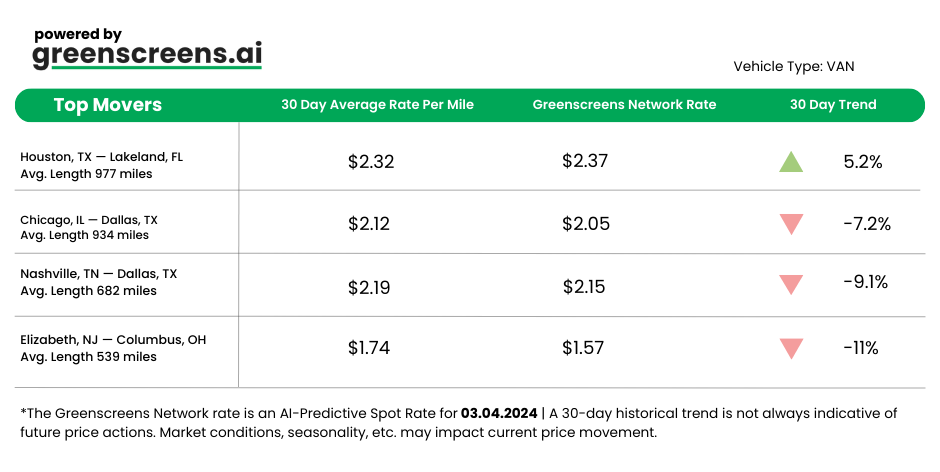
*Greenscreens.ai, forecasts real-time truckload buy prices that are suited to each freight brokerage's purchasing power using AI and machine learning. Its engine takes into account over 130 attributes and data points in each rate forecast.
🐔 WHAT’S COOKIN’ IN FREIGHT
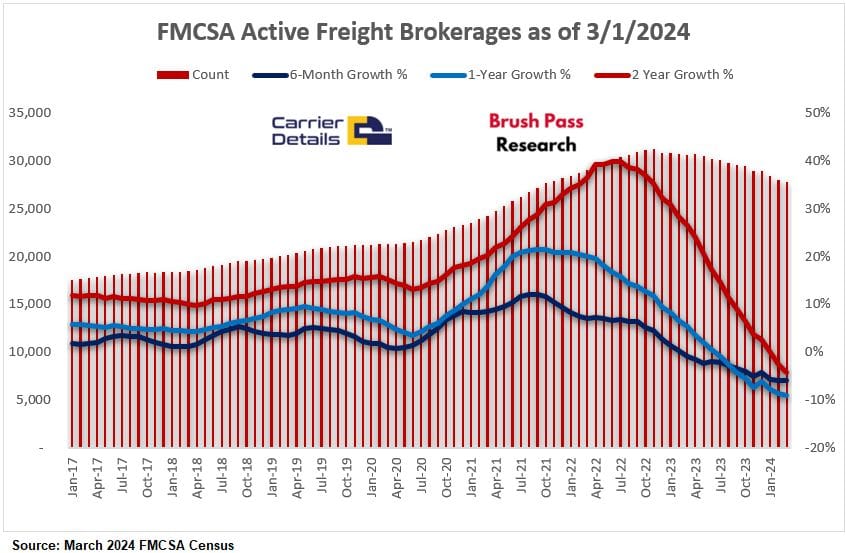
📉 Freight Brokerages Closing. The freight brokerage sector saw a 9.2% year-over-year decrease in active firms as of February 2024, according to data from Brush Pass Research. While this reduction is a step toward balancing the market, the total number of brokerages remains inflated, 15% higher than the pandemic's peak and 38% more than in 2019. The industry's current state shows that, despite the downturn, there's still an oversupply compared to available freight. Experts predict a continued trend toward consolidation as the market rightsizes itself.
📈 Las Vegas & Central Florida Warehouse Hotspots. Global logistics rents climbed by 6% in 2023, according to Prologis. The star of the show, Mexico, saw a 19% increase, fueled by nearshoring and a vacancy plunge to just 1%. Bringing it home, rents in the U.S. and Canada grew by 6%, cooling off from a record 30% increase in 2022. The Southeast and Southwest shone as hotspots, with markets like Las Vegas and Central Florida seeing growth of over 10%. However, growth slowed in major coastal gateways; Southern California saw a reversal, and New York/New Jersey experienced muted increases.
🚚 DAT Load Board Postings Dip. The trucking spot market hit a rough patch, with DAT noting a significant dip to 598,674 weekly load posts for the week ending February 24, marking the first fall below 600,000 since April 2020. This represents a 59% year-over-year plummet. Analysts note carriers are hanging on despite reduced freight demand and depreciating truck values. With operational costs rising, the industry braces for a gradual carrier exit. Yet, optimism remains for a demand-led recovery.
TOGETHER WITH ISO
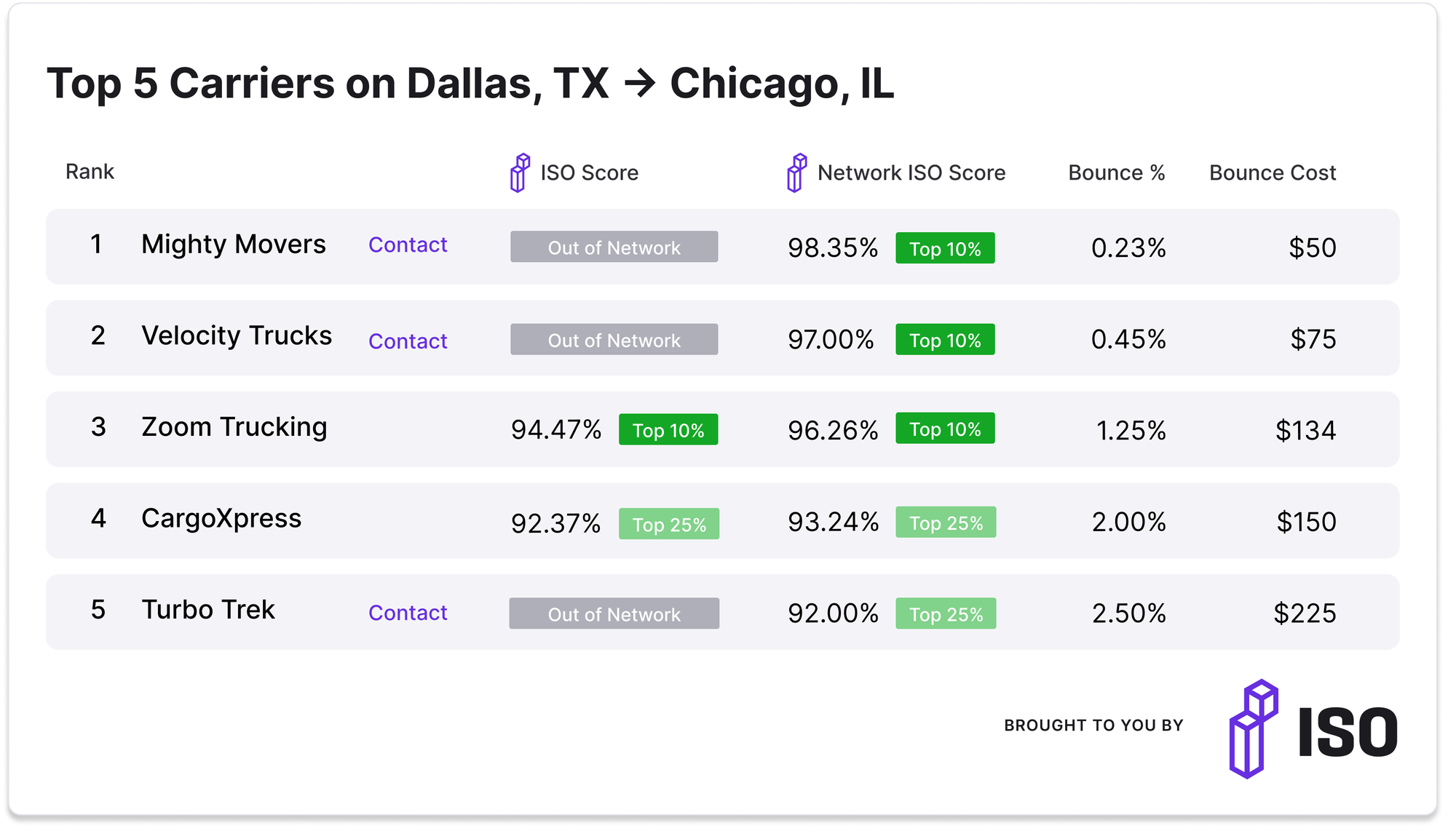
Carrier reliability is central to everything you do. Are you measuring it?
Booking unreliable carriers leads to higher operational costs: more bounces, more reschedules and more headaches. With ISO, you can source carriers for every lane based on service data. More reliable carriers mean happier customers, higher volumes and lower cost per load. Learn more at iso.io.
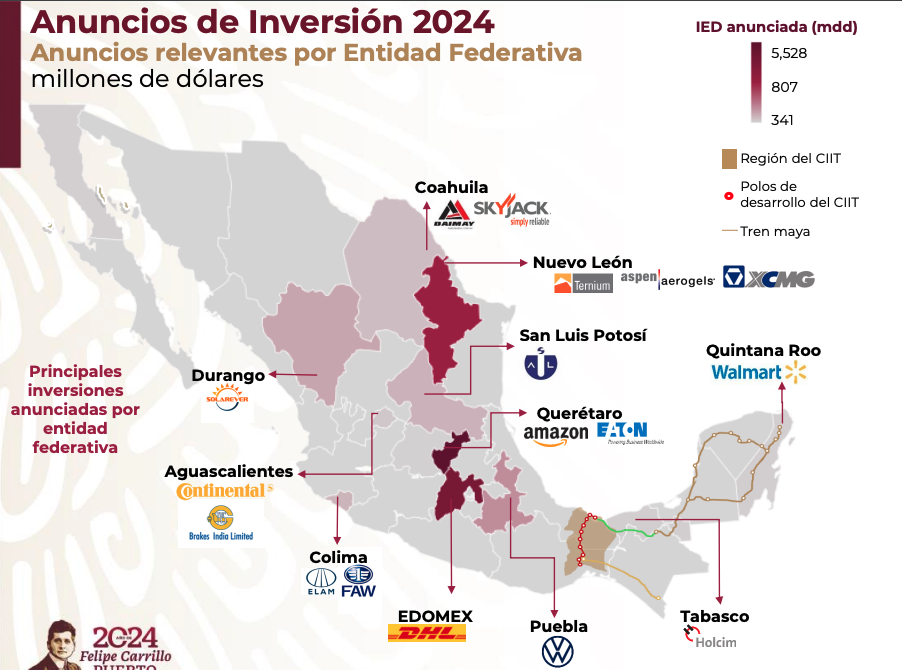
Recent years have seen Mexico emerging as a well of opportunity for foreign investors. A convergence of factors, including the diversification of supply chains away from China and Mexico's strategic advantages, has fueled this rapid rise of Foreign Direct Investment (FDI).
We're looking into the whys and hows of Mexico's ascendancy, the monetary magnitude of foreign investment, the regions most impacted, and more.
In early 2024, Mexico announced nearly US $26 billion in investments, spanning sectors from manufacturing to data centers.
Leading Contributors: The United States leads the pack in investment, with significant contributions coming from Germany, Argentina, and China.
Companies Announced:
Regional Hotspots: Investment is not evenly spread across Mexico; regions such as Querétaro, Nuevo León, and Puebla are emerging as significant beneficiaries, mainly because they are hubs of manufacturing and data centers.
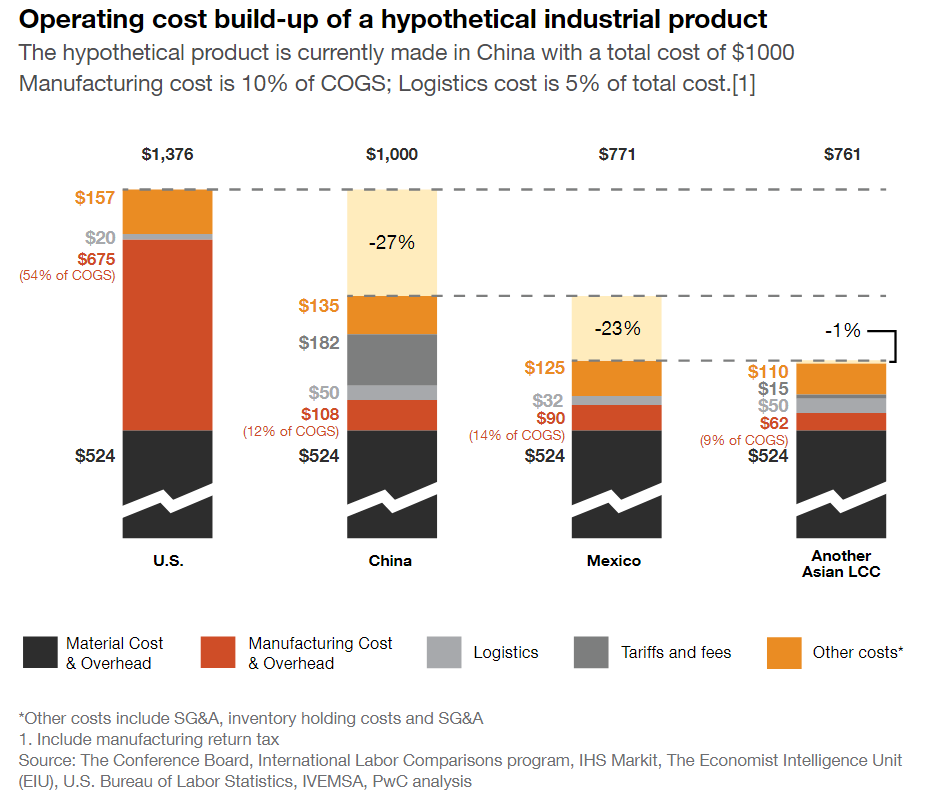
Post-pandemic, companies seek to limit risks by diversifying supply chains, moving away from a heavy reliance on China. Recent disruptions and trade tensions have heightened the need for closer, more reliable manufacturing hubs.
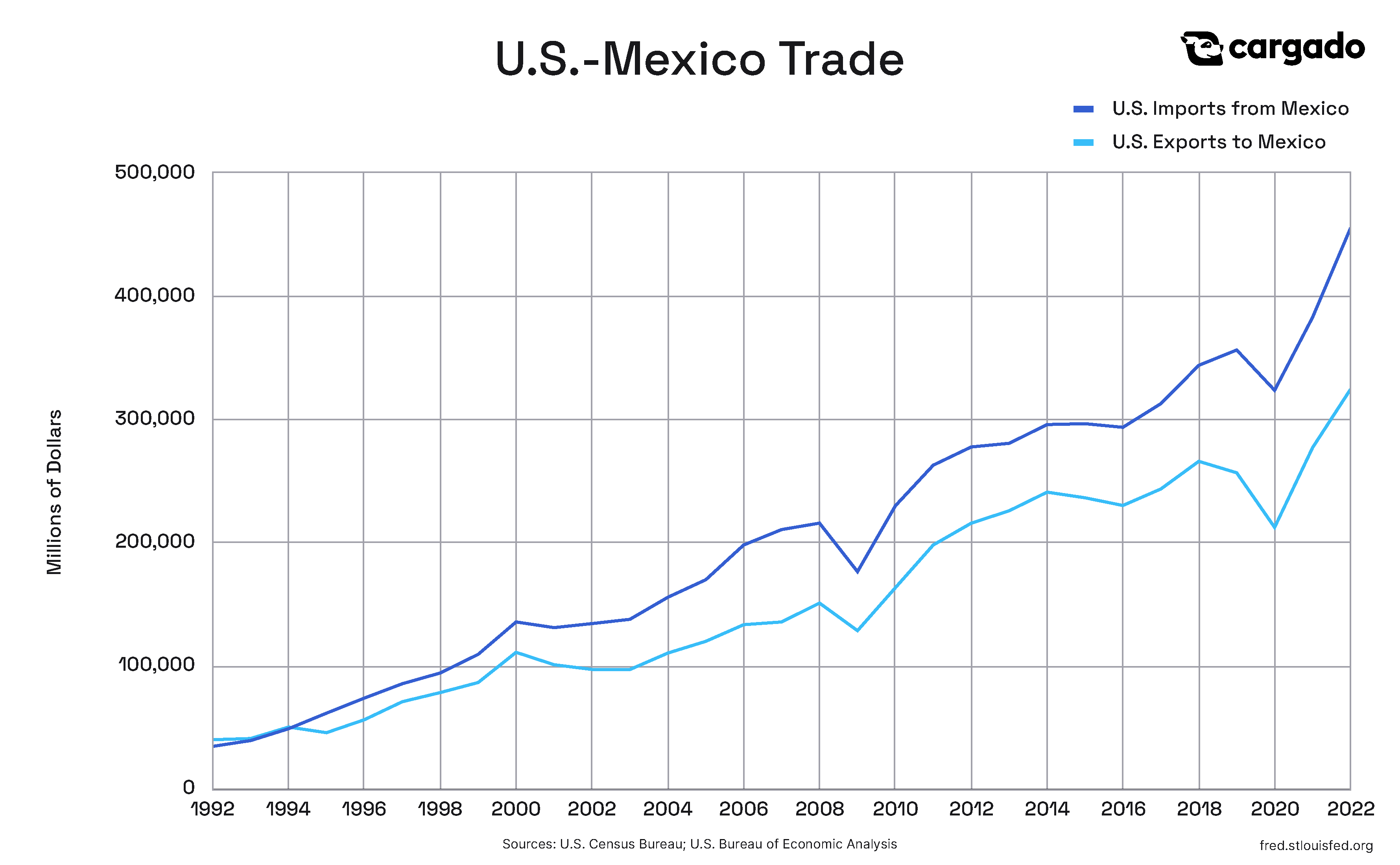
Mexico's Appeal: Mexico's proximity to the U.S., coupled with competitive labor costs and government incentives, presents an attractive alternative. It has now sealed itself as the number one trading partner to the U.S.
 Adriana Pulley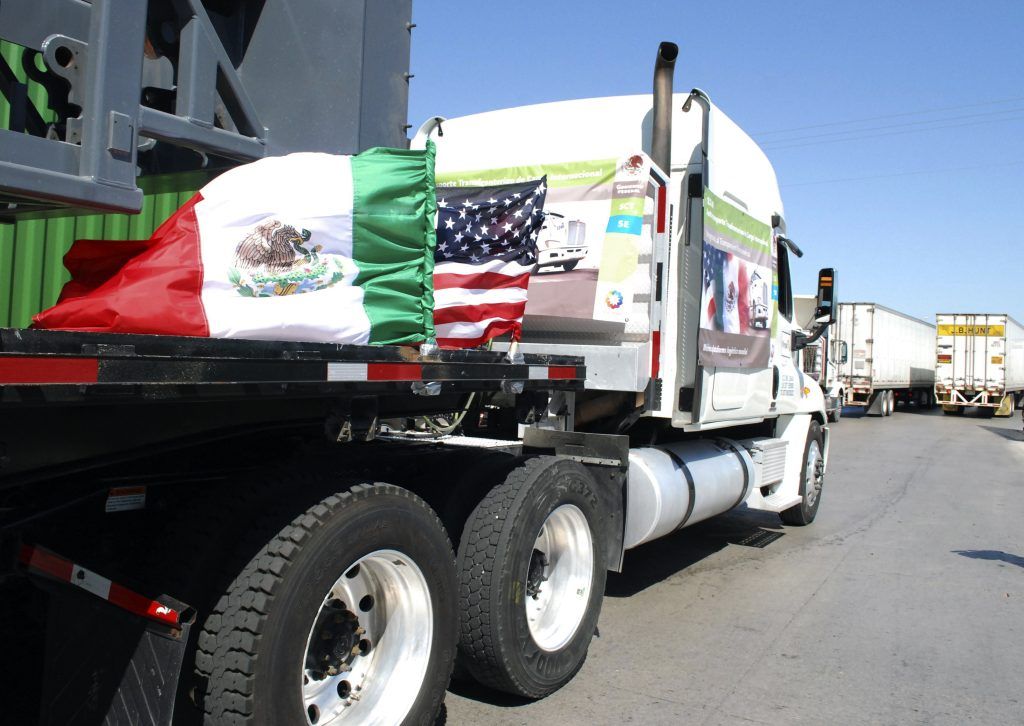
As seen in the numbers, China sees the benefits of investing in Mexico, giving them access to the U.S. by proxy.
With this rise in investment, questions linger over whether Mexico has the infrastructure to handle it all. Recently, we saw a failure in the country's customs system that led to a near total shut down of trade across the border.
Adriana Pulley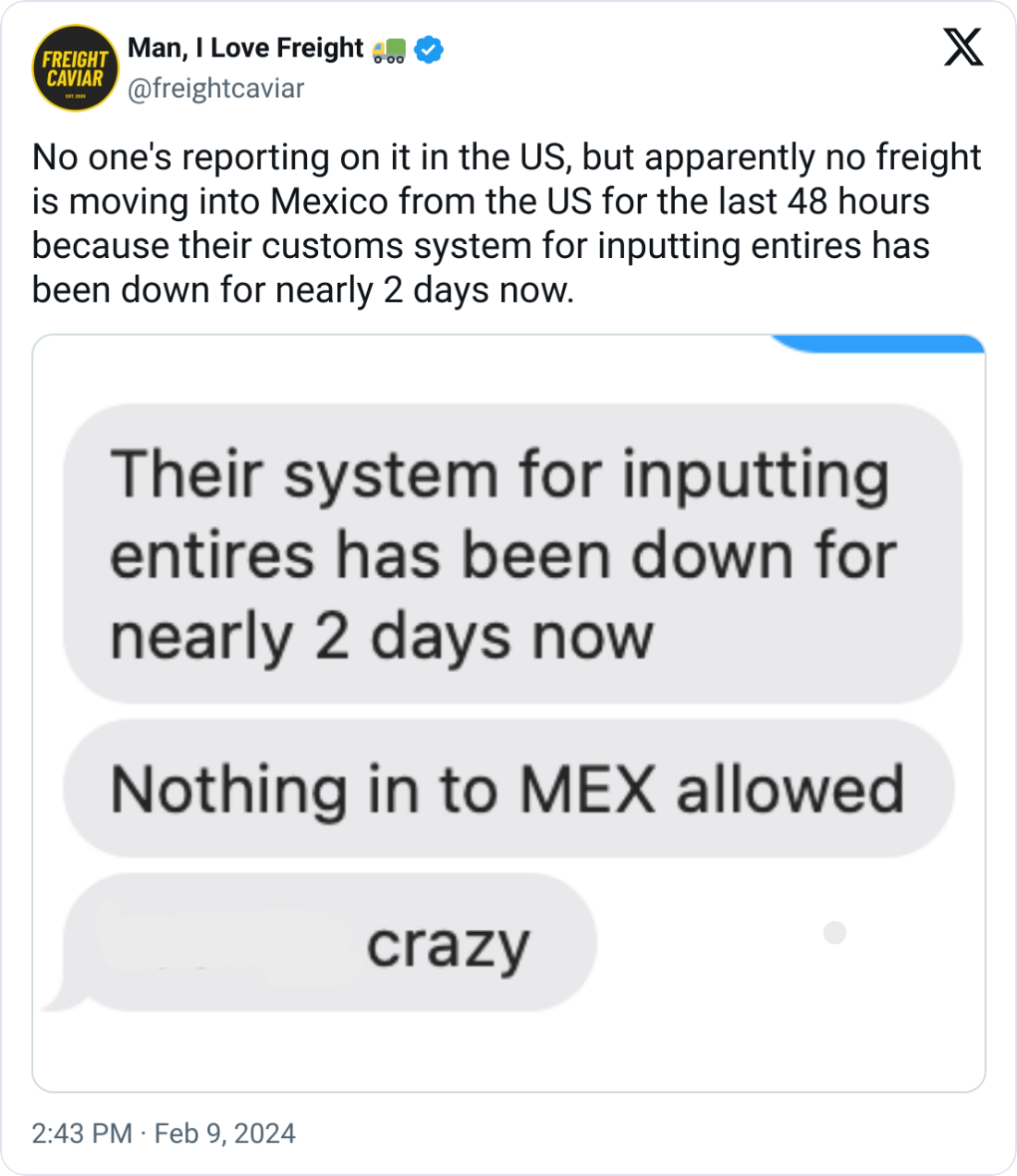
Sources: Mexico News Daily | Business Insider | Alliance for American Manufacturing | Investment Monitor
TOGETHER WITH RELIANCE PARTNERS
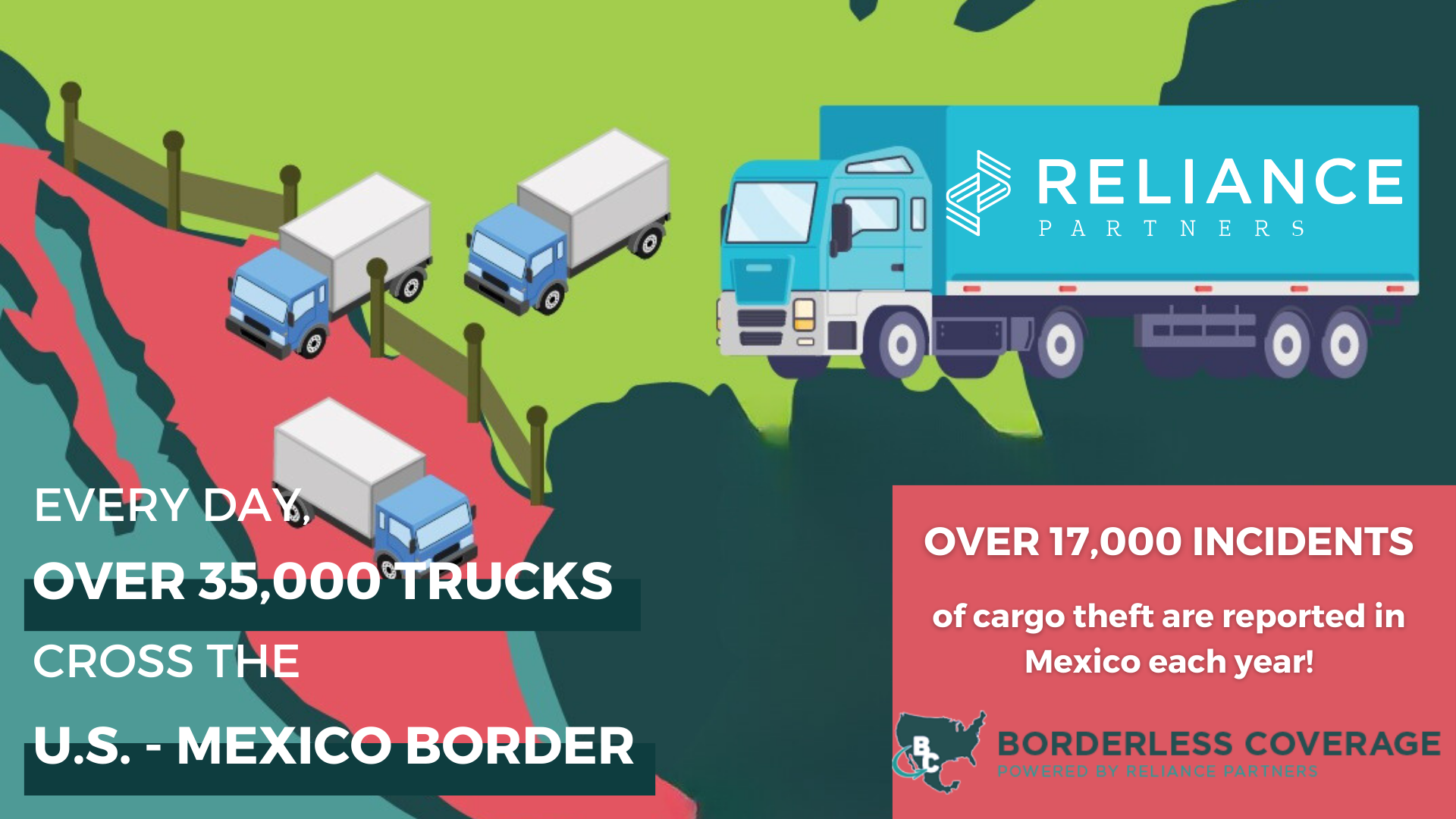
Borderless Coverage powered by Reliance Partners launches the Mexico Cargo Hijacking Data Portal to tackle the high risk of cargo hijackings in Mexico. Providing in-depth analysis, the portal reveals a significant increase in hijackings, particularly in central and southern regions, and underscores the need for enhanced security measures. This tool is vital for businesses to strategize safer operations and navigate Mexico's challenging logistics landscape. Read more about the data portal here, then get in touch with Reliance Partners today at 877.668.1704!
AROUND THE FREIGHT WEB
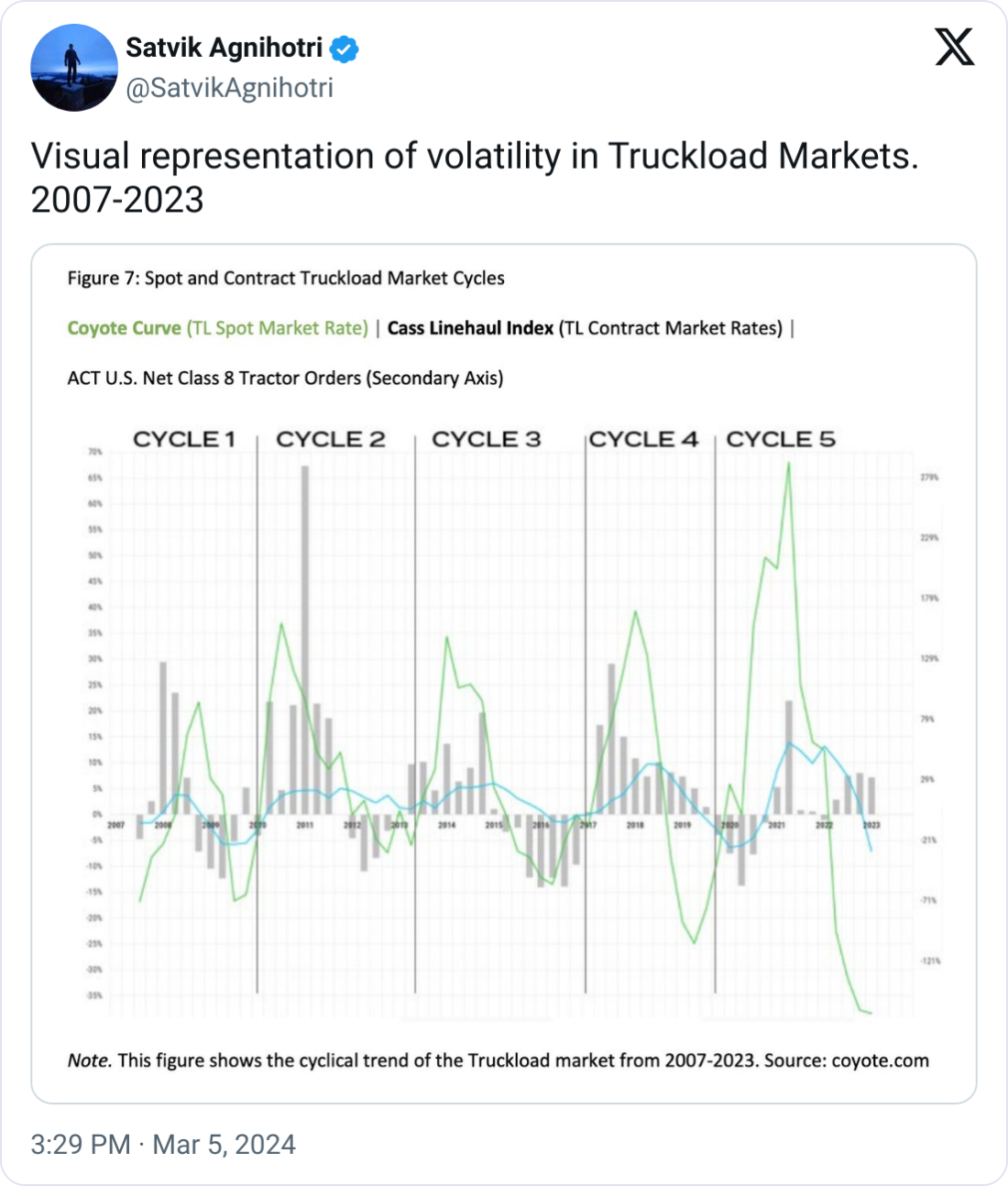
🔄 Market Cycles Visualized. An informative chart reveals the cyclical nature of the truckload market from 2007 to 2023, with insights into spot and contract market rates alongside truck orders.
🚚 Nikola's Milestone. Nikola has delivered its first hydrogen fuel cell electric trucks, totaling 35 in Q4 2023, despite supplier constraints.
📈 Savannah's Surge. The Georgia Ports Authority reports a 14.4% increase in container volumes for February, driven by growth in imports and exports. Investments in rail infrastructure aim to boost future trade.
✈️ Air Cargo Growth. Global air cargo demand soared by 18.4% in January, marking the strongest growth since summer 2021.
📊 Freight Index Insights: February saw transportation prices rise, signaling a slow recovery in the freight cycle despite faster growth in transportation capacity, according to the LMI.
FREIGHT MEME OF THE DAY

Also, check out:

Flatbed rejections hit a record 48.7%, broker numbers stop falling, and diesel jumps 30 cents overnight.

Congress is moving to put driverless 80,000-lb trucks on public roads. Plus: 13,000 California CDLs get cancelled, diesel hits a 32-year record, Florida wants $50K to get your truck back, and more.

Ryan Schreiber breaks down everything about strategy, relationships, mindset, and AI in logistics.

Oil spikes to $120 on Iran news before settling near $106. Plus: another influencer shipment gets stolen, Wyoming can now pull your truck, 24 states sue over tariffs, and more.
Join over 14K+ subscribers to get the latest freight news and entertainment directly in your inbox for free. Subscribe & be sure to check your inbox to confirm (and your spam folder just in case).