The Middle East crisis is already hitting carriers. Plus: Florida lost $3B in crops, flatbed rates posted a fifth straight weekly increase, a $5B brokerage was just acquired, and more.
Two bills just dropped in the Senate that could reshape trucking faster than anything since deregulation. Plus: Russian hackers targeted your load board, flatbed rejection rates just hit 40%, and a robot is taking the Houston-Dallas overnight run.
FreightCaviar Weekly Recap.From TQL's reminder to the latest ICE arrest that has an insane backstory.Here are this week’s most talked-about freight stories.
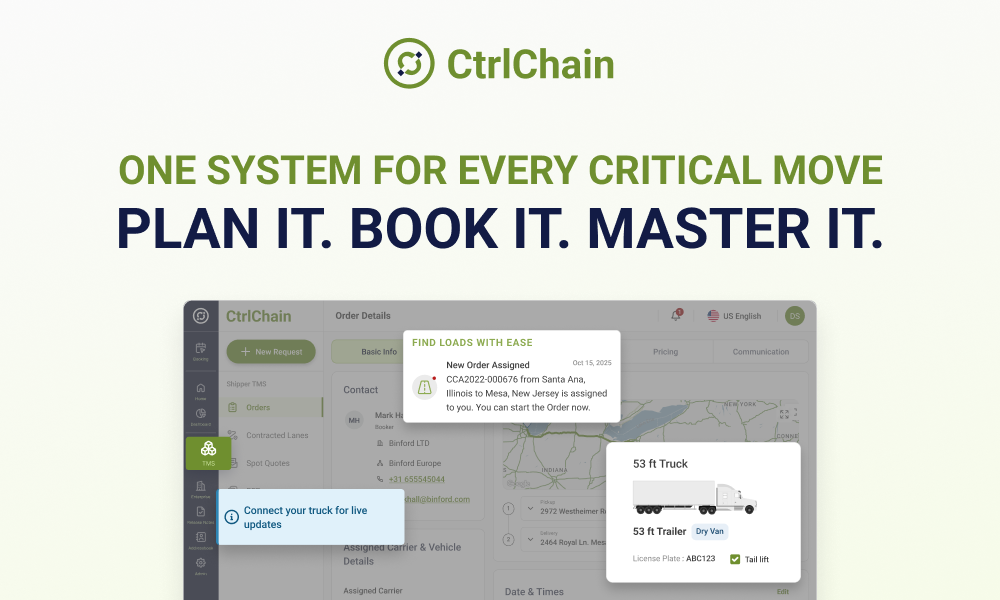
Today's Newsletter is Brought to You by CtrlChain.
Reddit Post of the Week
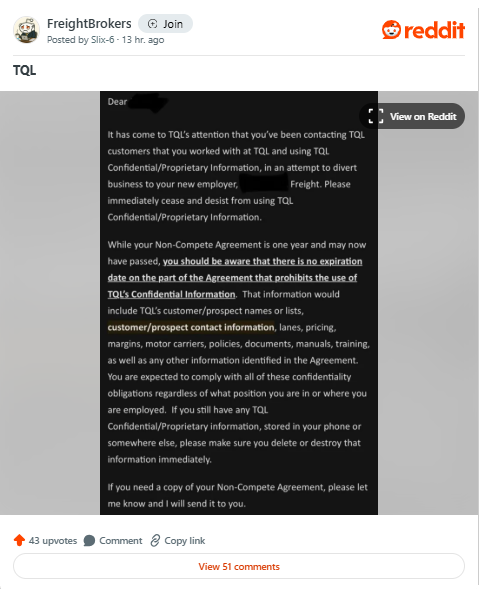
A recent discussion on r/FreightBrokers has sparked debate after a former Total Quality Logistics employee shared an email the company sent regarding its non-compete and non-solicitation agreement.
The message reminded former employees that while the one-year non-compete period may expire, restrictions on using TQL’s confidential information carry no expiration date. This includes details on customers, prospects, lanes, pricing, carriers, and internal documents.
This post has also made its way to LinkedIn with one poster saying:
“Think about this. As massive as TQL is, they have worked with about every valid shipper in the USA at some point. Case in point: You are [stuck]! They are going to haunt you for the rest of your life.”
Some saw the email as a standard legal reminder of contractual obligations, while others argued it functioned as an intimidation tactic designed to discourage former employees from pursuing opportunities elsewhere.
The question for the freight community is straightforward: Is TQL fairly protecting its business interests, or is this a tactic to threaten and restrict workers’ future employment?
Running a successful trucking operation means doing more with less, and CtrlChain makes that possible. With automated systems, carriers can take on more freight without adding staff, scaling volume while keeping overhead low.
Smarter route and trip planning cuts deadhead miles and wasted hours, while real-time dashboards keep performance in check, spotting potential issues before they become costly. Automation in the back office frees you from endless paperwork, giving you more time to focus on booking and moving loads.
And with our Conversations feature, customer communication is seamless, updates are instant, resolutions are faster, and clients stay happy and loyal. Every tool works together to make operations leaner, smarter, and more profitable. Let’s build a future where freight moves efficiently and carriers operate with confidence.
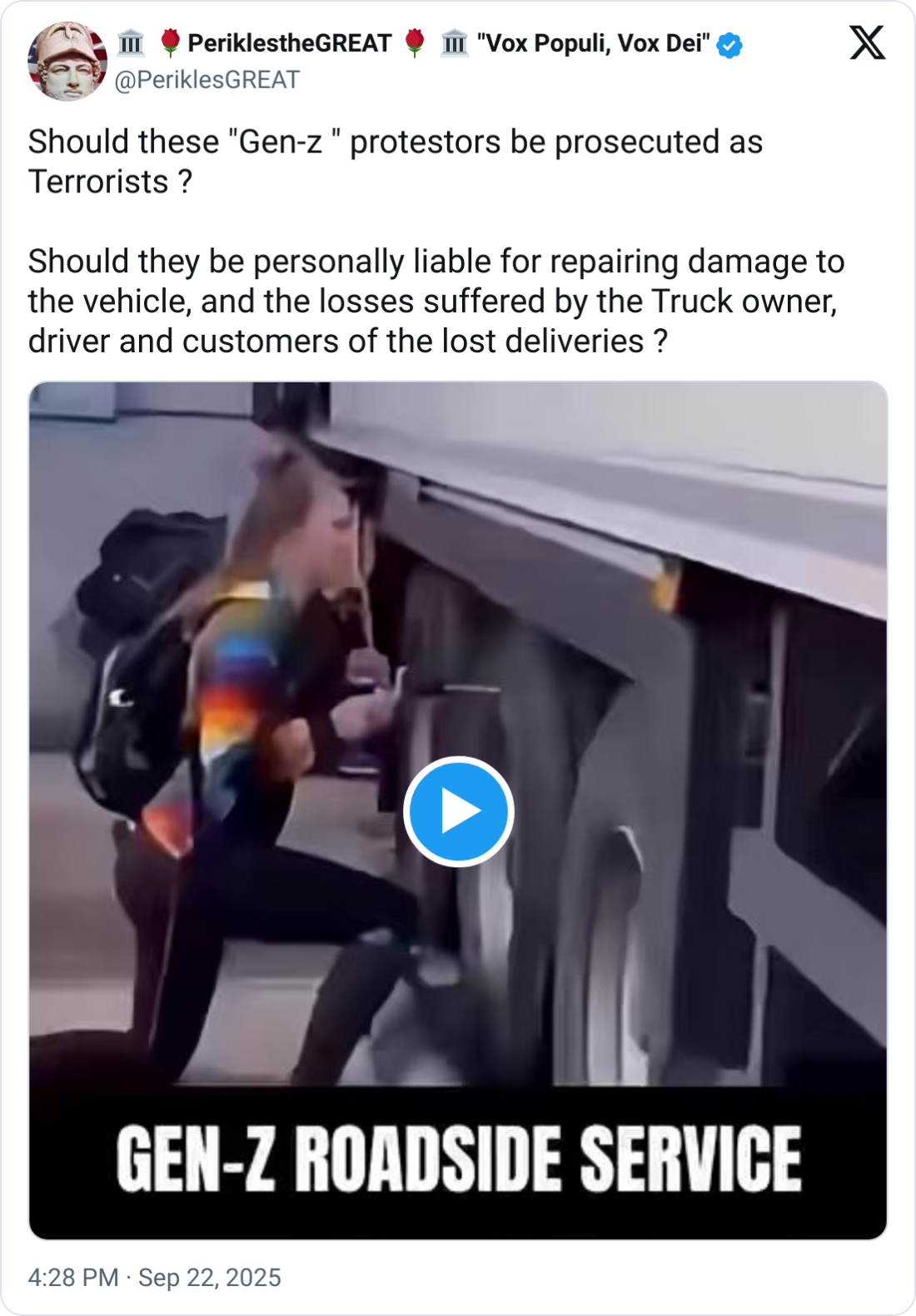
An X post questioned whether recent Gen-Z protestors who damage trucks during protests should face terrorism charges and financial liability for damages, delivery delays, and losses suffered by carriers and customers. While in America we do have the right to protest, we do not have the right to vandalize property.
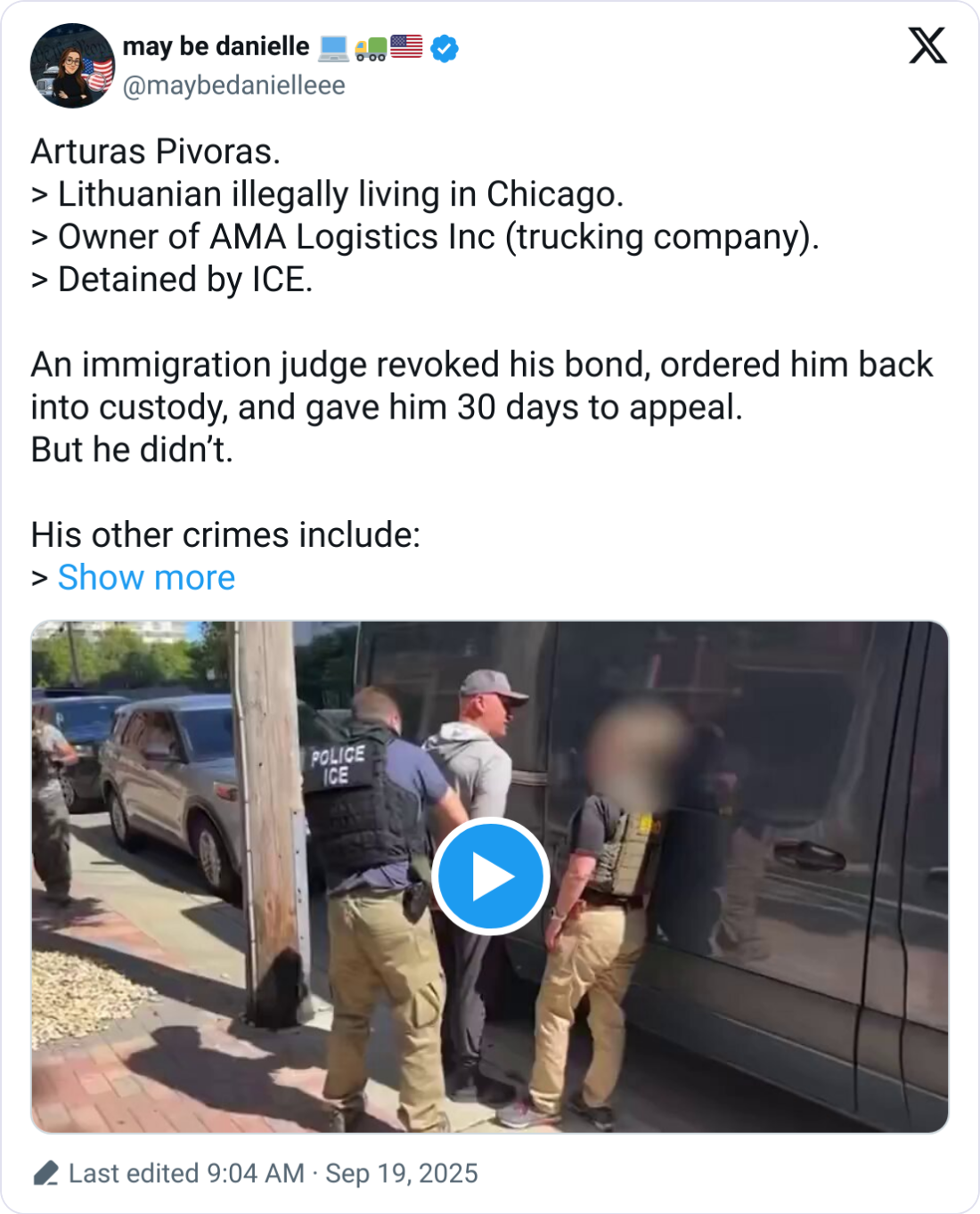
Danielle Chaffin highlighted the case of Arturas Pivoras, a Lithuanian national in Chicago linked to AMA Logistics Inc., a company that is 15 years old and has 18 trucks under its belt. Detained by ICE, Pivoras has a history of criminal activity, including copper wire theft and aggravated assault on a police officer. His company also received a PPP load of $450K, according to Chaffin's research.
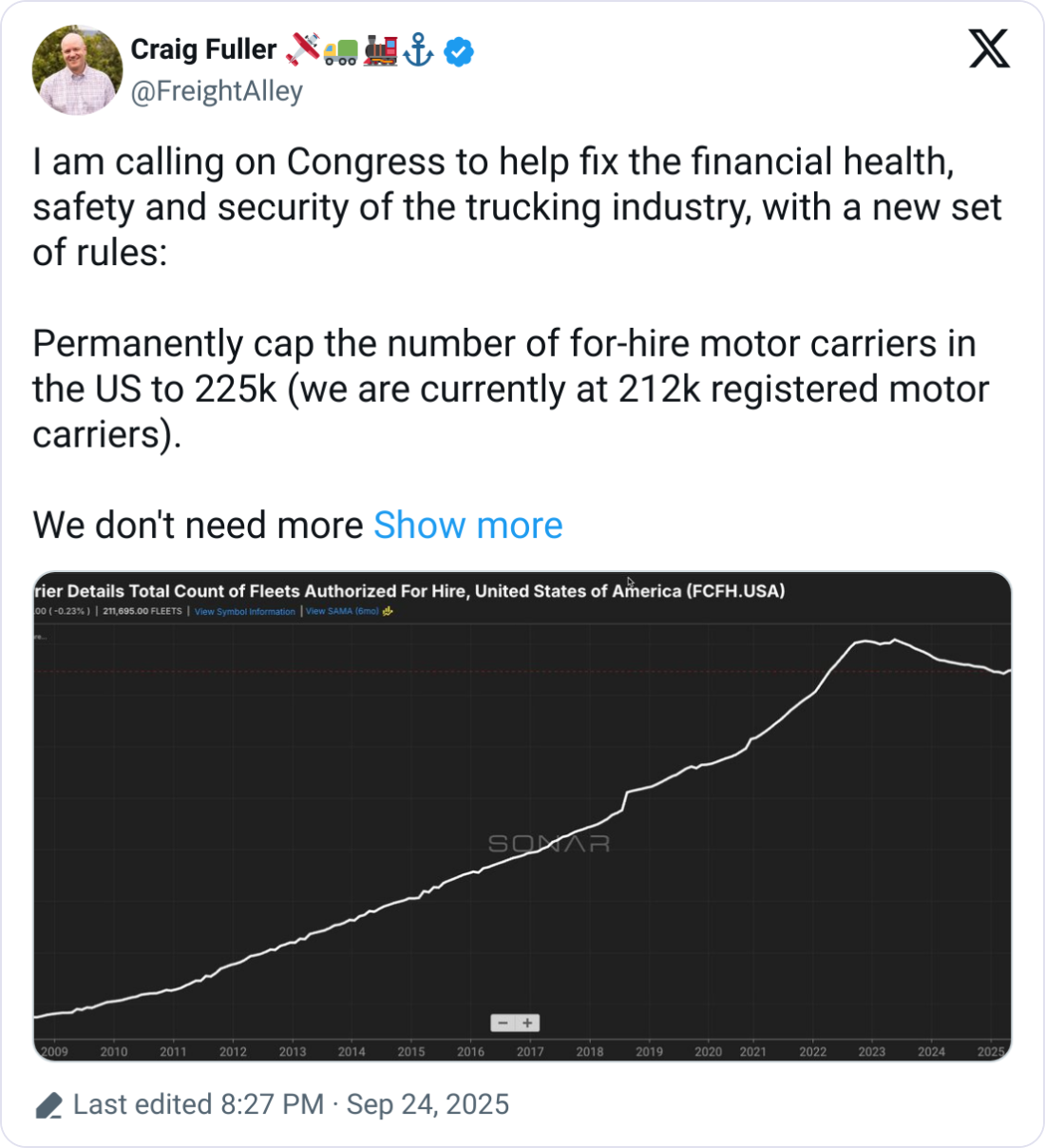
Craig Fuller urged Congress to overhaul trucking regulations by capping the number of motor carriers, tightening transfer approvals, and restricting foreign ownership. Fuller warned unchecked growth invites unqualified operators, undermining safety and legitimate competition. There is a debate brewing within the post's comment section with some for and against this proposal. Take a look a the thread when you have time.
FreightCaviar Story of the Week
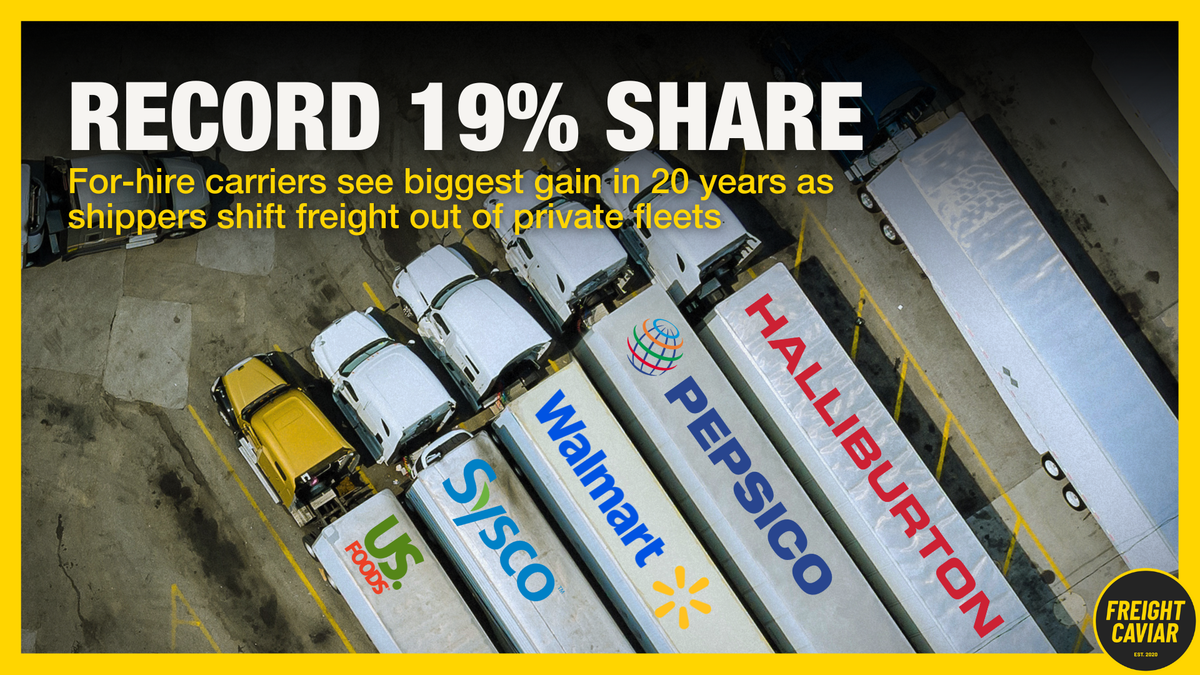
Private fleets are loosening their grip on freight at unprecedented levels. According to the National Private Truck Council, for-hire carriers now control 19% of outbound freight from private fleets, the highest share on record. With private fleets’ portion dropping to 70%, and brokers holding steady at 10%, the shift shows cost pressures, trade uncertainty, and persistent driver shortages. Even big fleets like PepsiCo, Sysco, Walmart, and Halliburton are outsourcing more loads, signaling cracks in a model designed to shield shippers from volatility. Analysts warn this could reshape the balance of power among fleets, carriers, and brokers in the years ahead.
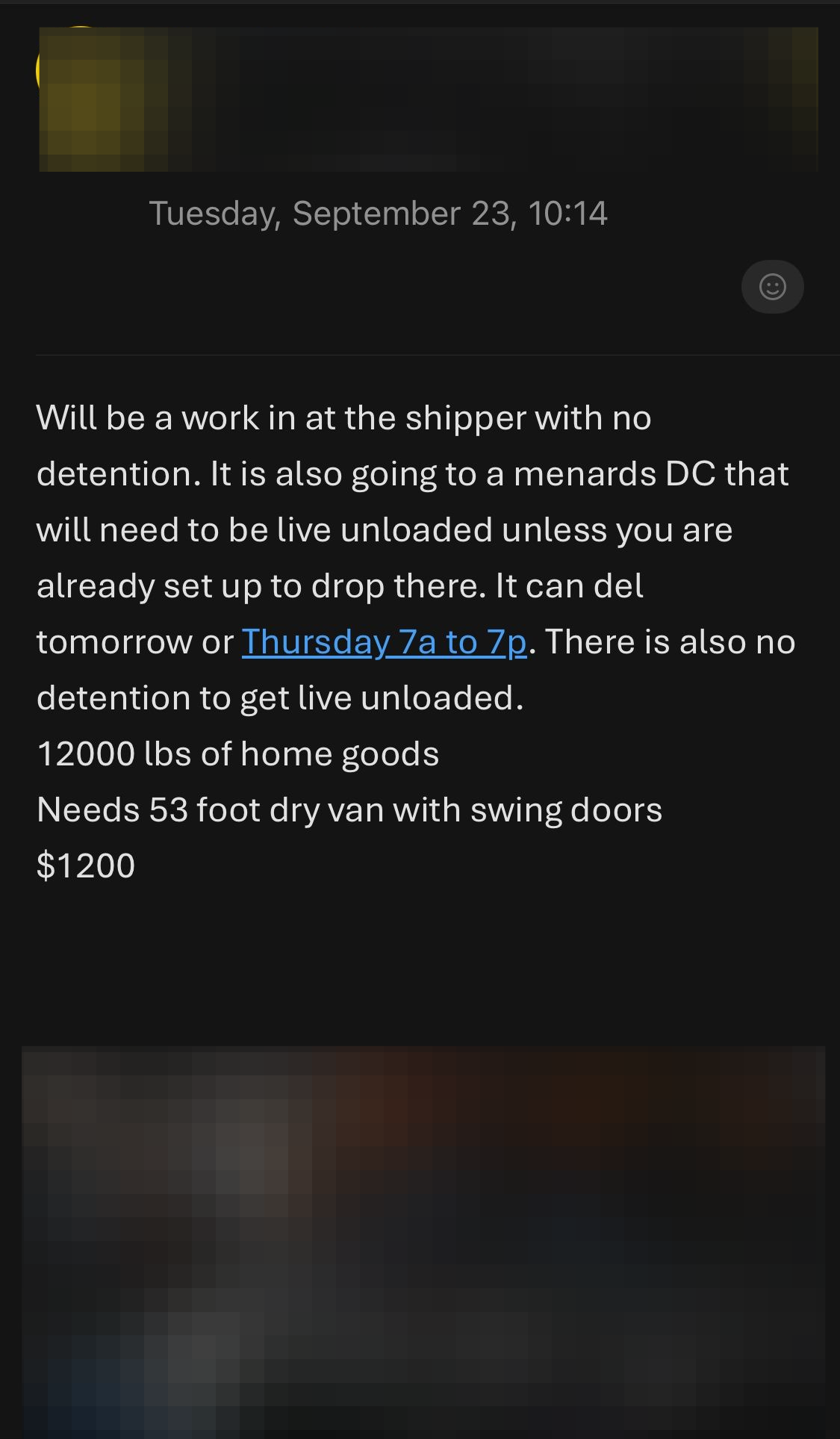
Brian Woodring, CEO of Anchor Reliable Transport, shared a broker email stating no detention pay would be offered to carriers on a Birmingham-to-Plano load.
Woodring criticized the practice, noting the load was already delayed due to cheap rates and questioning whether brokers should impose such terms, or if carriers should ever accept them. The post has fueled debate across LinkedIn over fairness, accountability, and how detention policies impact both sides of the market.
FreightCaviar Podcast: On this week’s FreightCaviar Podcast, we sit down with the team behind HappyRobot, an AI-native operating system that understands your business and powers real-time autonomous operations. We dive into how their platform bridges humans and autonomous workers, explore Bridge — their new AI-powered control panel for teams — and discuss the company’s long-term vision for the future of logistics. The episode is on YouTube, Spotify, and Apple Podcasts.
Manifest 2026: We're proud to be an Official Partner of Manifest: The Future of Supply Chain & Logistics conference, the premier event shaping what's next in freight and logistics. Save $200 on the current price with our link.
Freight Broker Group Chat: Lost a load to a ghost MC? Just discovered a 15-layer carrier spoof ring? Come swap war stories, drop memes, and ask the stuff no one wants to post on LinkedIn. Join us on forum.freightcaviar.com
FreightJobs.co: The job board built for freight folks. Find your next gig. Post your next hire. All in one spot. Browse or post here.
Hello! I'm Jerome FreightCaviar! I’m into the politics of freight and the impact it will have worldwide. I'm always eager to learn more. Follow me on X @JeromeFreightC
The Middle East crisis is already hitting carriers. Plus: Florida lost $3B in crops, flatbed rates posted a fifth straight weekly increase, a $5B brokerage was just acquired, and more.
Two bills just dropped in the Senate that could reshape trucking faster than anything since deregulation. Plus: Russian hackers targeted your load board, flatbed rejection rates just hit 40%, and a robot is taking the Houston-Dallas overnight run.
This week: The Dalilah Law, a trucking bankruptcy that wiped out thousands overnight, a FreightGuard civil war on Reddit, and the payroll data that's predicting Q4 capacity.
Keep up with the freight broker world in 5 minutes.
Join over 14K+ subscribers to get the latest freight news and entertainment directly in your inbox for free. Subscribe & be sure to check your inbox to confirm (and your spam folder just in case).