LA rejections just doubled, flatbed hit $3.74, and 9,500 drivers are off the road. Plus: SoCal theft ring busted, C.H. Robinson cuts headcount, UP CEO fires back, and more.
Happy Monday. The Wild West era of freight might officially be over. Federal agencies, carrier data, and enforcement are converging fast, and the fallout is already visible on the map.
Plus:
Tender Rejections Hit Double Digits
The $12 Billion Tech-Broker Mashup
FMCSA Targets ELD Fraud
📢
FreightCaviar Magazine. Subscribe here to join 150+ other brokers getting the FreightCaviar print magazine direct to their offices.
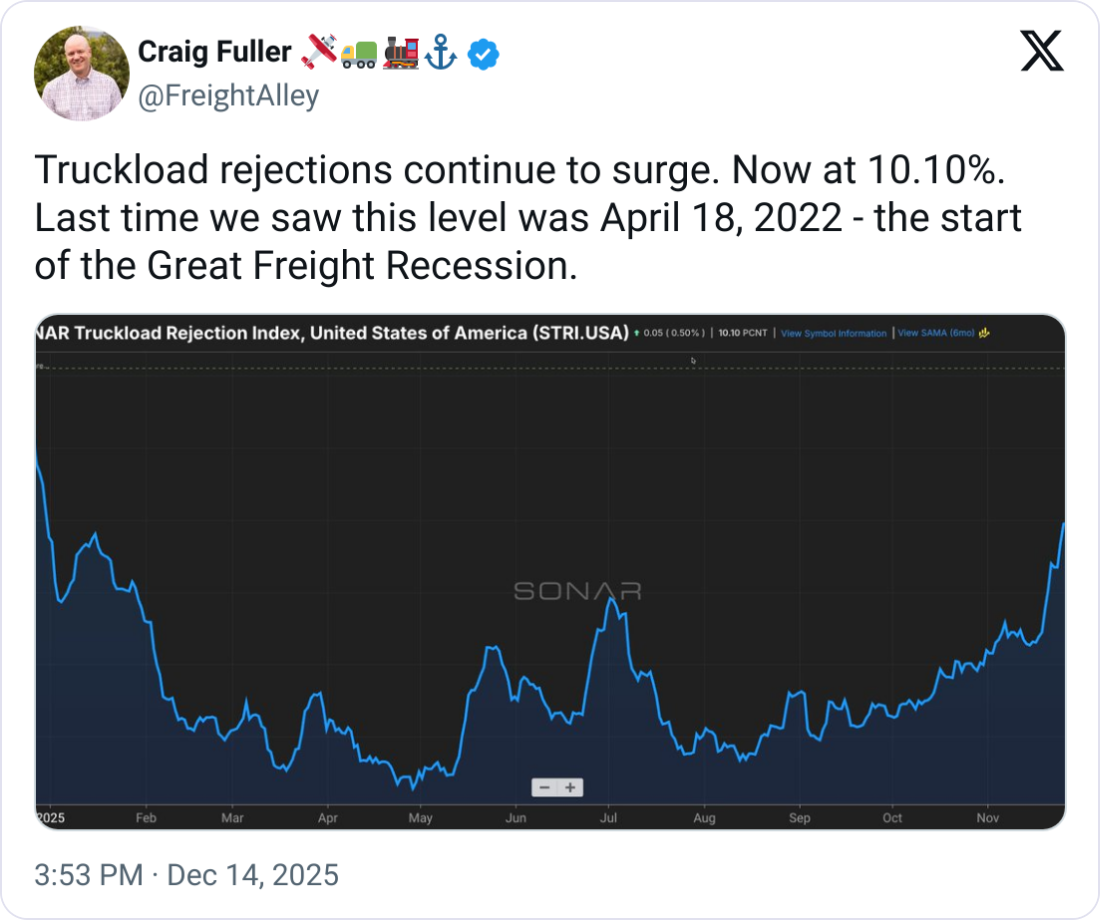
📈 Rejections Hit Double Digits. FreightWaves CEO Craig Fuller, who famously called the 2022 freight recession, asserts the SONAR Truckload Rejection Index (OTRI) breaking 10% is key. This level indicates shippers are struggling to cover freight due to tightening capacity. Fuller argues this is the "largest capacity purge in history," driven by fraud crackdowns. Commenters are split. Many veteran carriers are relieved, seeing it as a long-awaited capacity retraction due to illegal CDLs leaving. Others are skeptical, labeling it seasonal or purely supply-driven, warning, "Dormant carriers waiting for better rates will re-enter when rates improve, and rates will drop again."
🤝 The $12 Billion Tech-Broker Mashup. Private equity firm Thoma Bravo may merge e-commerce software giant Auctane (formerly Stamps.com) with WWEX Group (GlobalTranz), creating a single $12 billion supply chain technology powerhouse. This deal would vertically integrate the high-growth e-commerce shipping world directly into the nation's largest agent-based brokerage network. Given WWEX's history of high-profile legal battles over the agent model, integrating this structure with a massive, high-profile tech stack is a potential game-changer. It accelerates market dominance while likely inviting scrutiny on its size and influence.
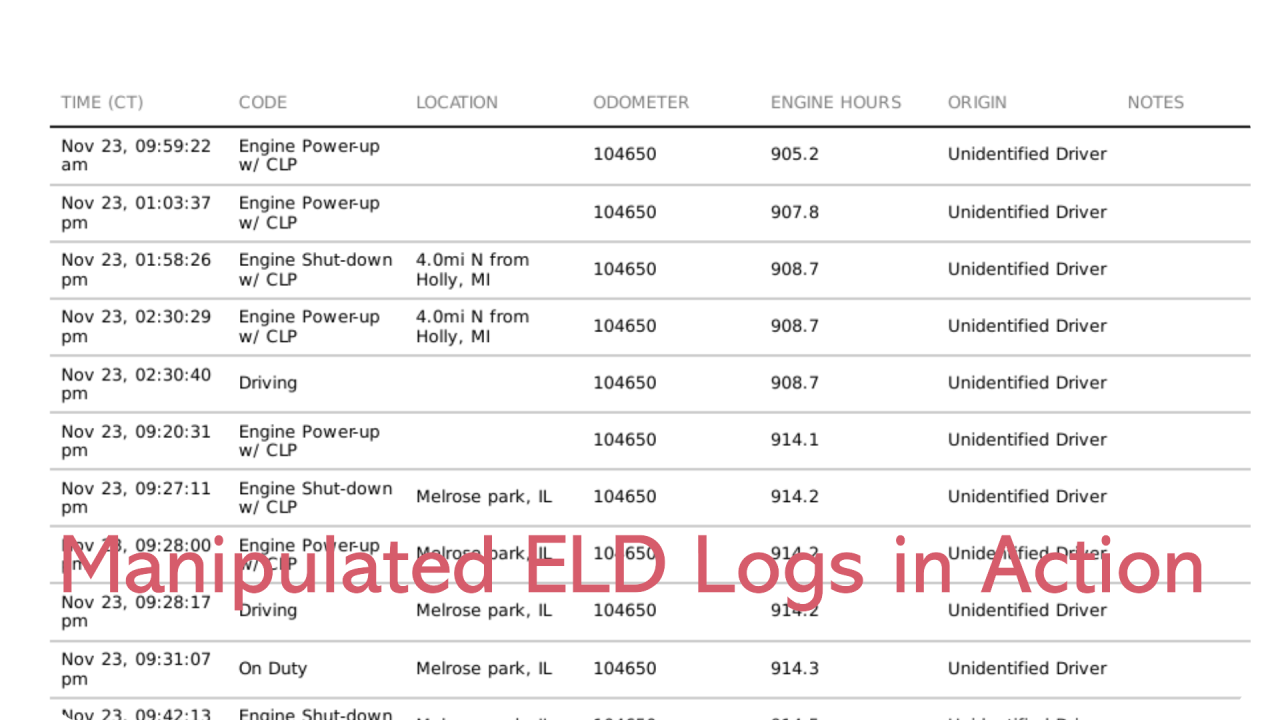
🔒 FMCSA Targets ELD Fraud. The FMCSA leader, Derek Barrs, is signaling the end of the ELD self-certification model. Barr's priority is a shift to rigorous third-party certification for all Electronic Logging Devices. This move directly addresses the rampant data manipulation and "ghost" logs used by bad actors, which Triumph CEO Aaron Graft called a national security risk. Ending the honor system will improve safety, validate the ongoing crackdown efforts, and eliminate the cheap, fraudulent devices contributing to poor compliance.
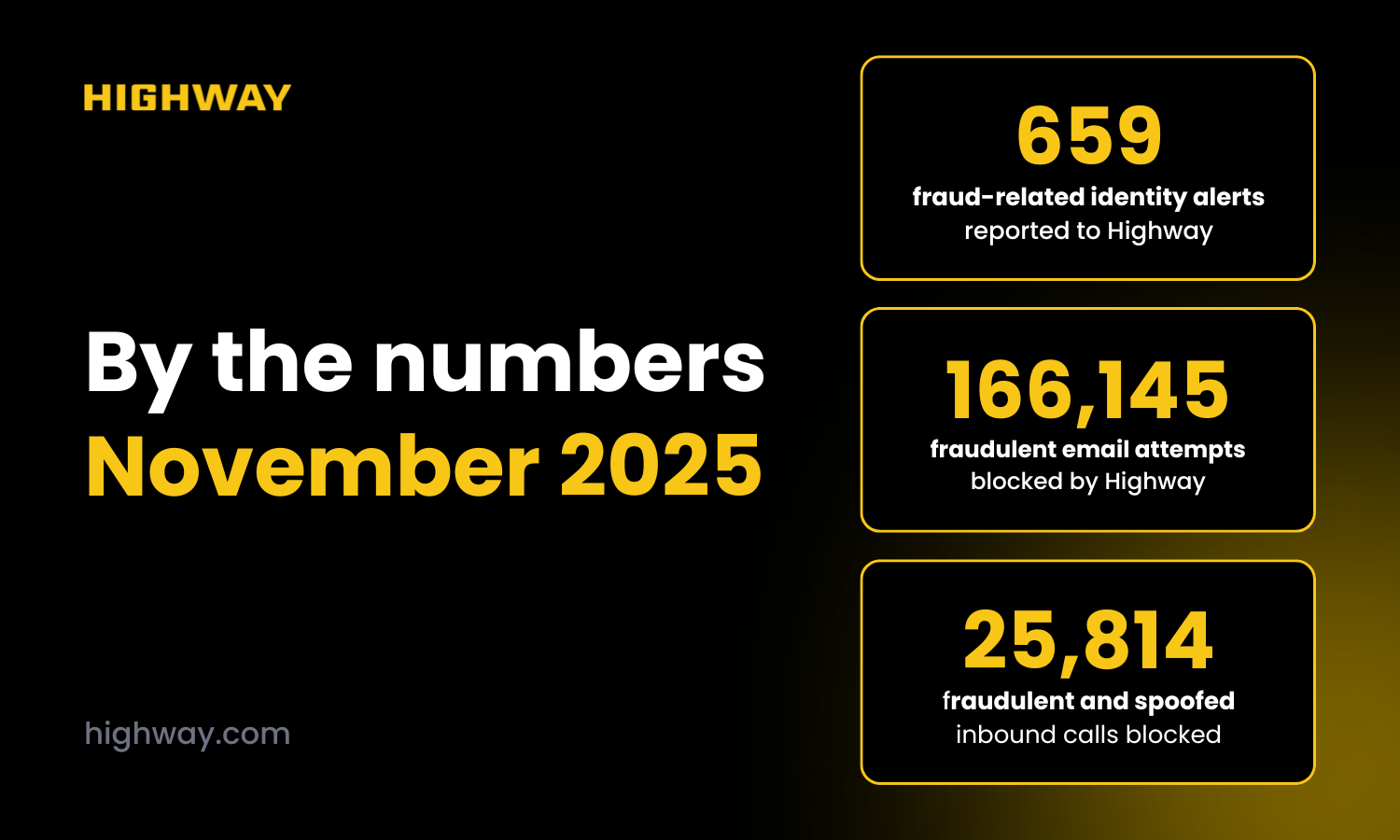
Month after month, the pattern is consistent: fraudsters continue to scale, targeting every weak point in a broker’s workflow as volume and urgency increase.
In November, Highway blocked:
166,145 fraudulent email attempts
25,814 spoofed inbound calls
659 fraud-related identity alerts
The holiday season creates ideal conditions for fraud as teams are stretched thin and decisions move faster. As we move into the Christmas holiday period, keeping teams aware and trained on emerging fraud risks is critical to preventing incidents when it matters most.
The Crackdown: When Freight Becomes National Security
The narrative around trucking fraud and regulation just shifted gears.
We are moving past simple "compliance" into the realm of national security, with industry leaders and federal agencies launching a coordinated offensive against illegal CDLs, foreign data risks, and English language proficiency (ELP) violations.
A graph from Bloomberg shows that English language proficiency violations remained low early in 2025, then surged beginning in June, with a growing share resulting in drivers being placed out of service by late summer and fall.
For years, the industry has complained about "ineffective bureaucracy" and fraud. Now, the data (and the feds) are finally catching up.
Here's the latest.
What’s Happening
A multi-front crackdown is squeezing carriers who have been playing fast and loose with the rules.
The "Worst Offender"
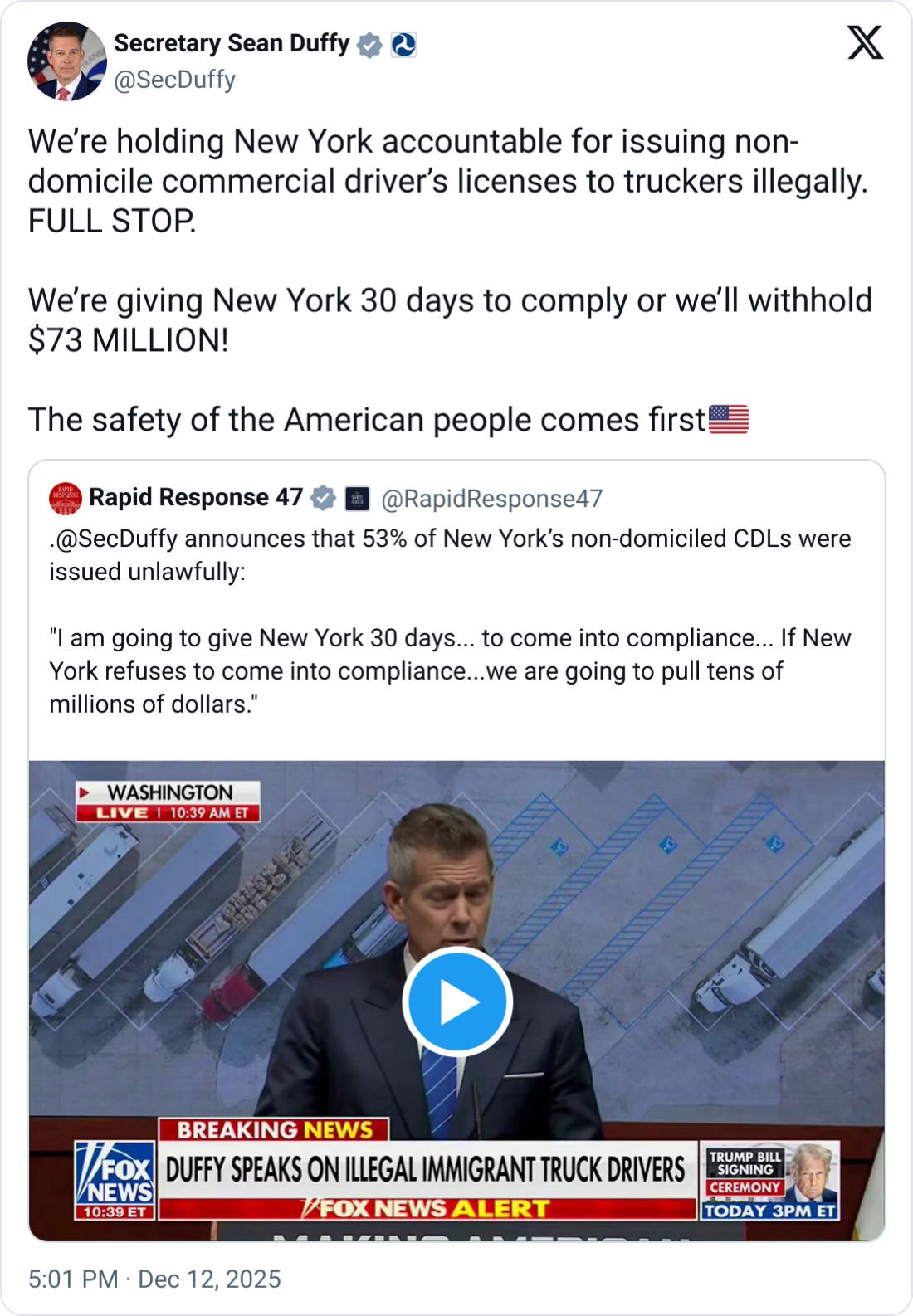
The Federal government has formally labeled New York as the "worst offender" regarding the issuance of commercial licenses to unqualified drivers. The dispute centers on New York’s "Green Light Law," with the US DOT now threatening to withhold federal highway funding if the state doesn't close loopholes allowing non-domiciled drivers to bypass standards.
"When more than half of the licenses reviewed were issued illegally, it isn't just a mistake—it is a dereliction of duty by state leadership." – DOT Secretary Sean P. Duffy
Boots on the Ground
In a three-day blitz at an Arkansas weigh station, authorities inspected over 100 trucks specifically targeting CDL validity and English proficiency requirements.
The Purge is Visible
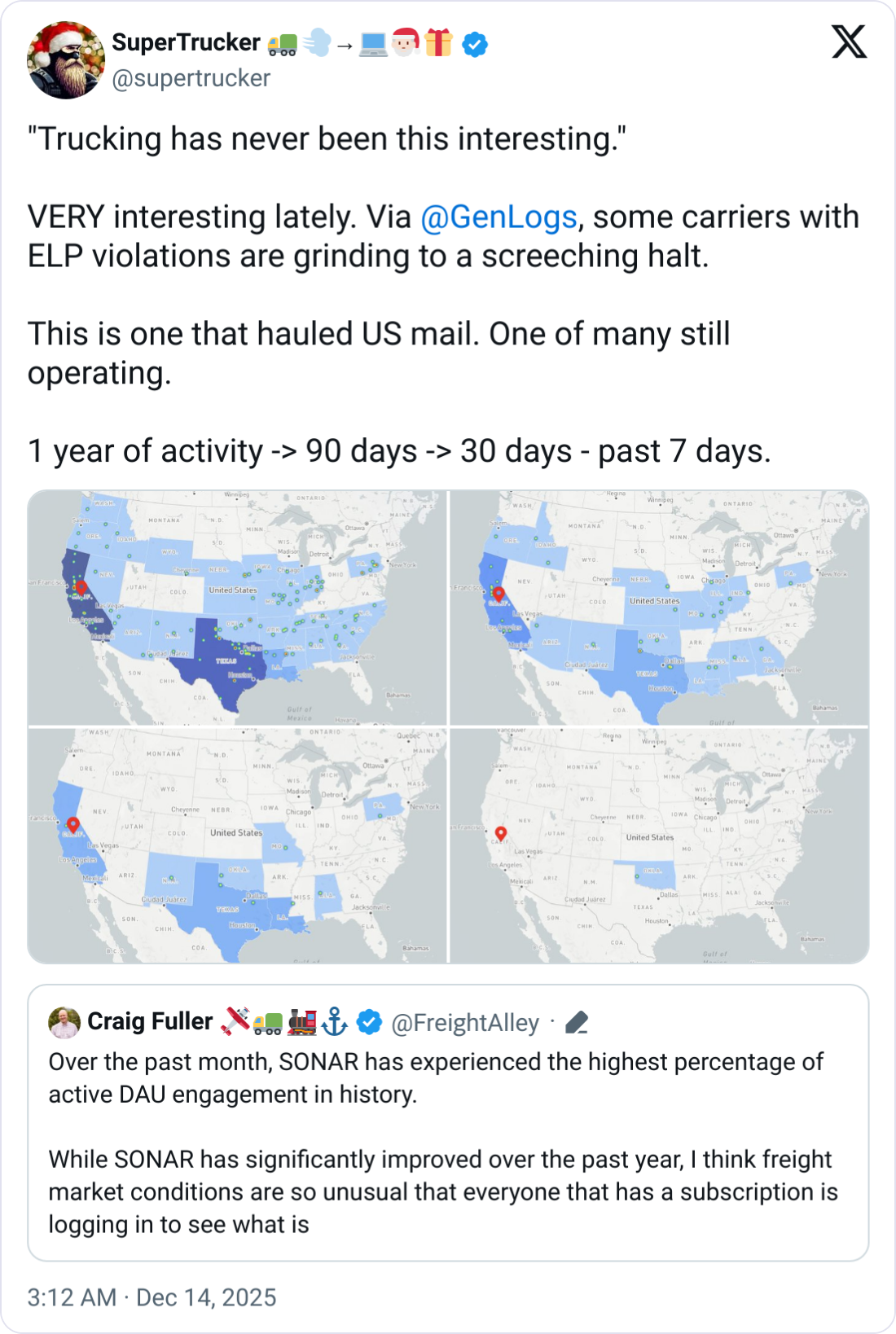
Data from GenLogs, shared via SuperTrucker, visualizes the impact. Maps of carrier activity show fleets with ELP violations "grinding to a screeching halt," with activity shrinking from nationwide coverage to near-zero in just 30 days.
And that reflects in the market. Craig Fuller reports SONAR is experiencing its highest percentage "in history," based on daily active user (DAU) count.
Question of National Security
In a LinkedIn post, Triumph CEO Aaron Graft argued that protecting the flow of freight is no longer just about economics.
"Want to know how to sow the seeds of war without firing a shot? Track and map our supply chain," Graft wrote.
ELD manipulation, chameleon carriers, CDL bribery scams, and other types of fraud plague the industry.
"Does it make sense that hundreds of businesses can be registered to a single P.O. Box?" Graft asks rhetorically.
Graft's final call is for a rigorous analysis of risks like these, saying, "I’m all for free markets, but everyone should play by the same set of rules, or why have rules at all?"
Why it Matters
"Ineffective bureaucracy, lack of enforcement, and outright fraud have hurt the industry in ways invisible to most, but obvious to those of us close to it," says Graft.
The "Wild West" era of digital freight might be ending. If you aren't auditing your carrier base for ELP compliance and valid CDLs, the feds (or the data) will eventually do it for you.
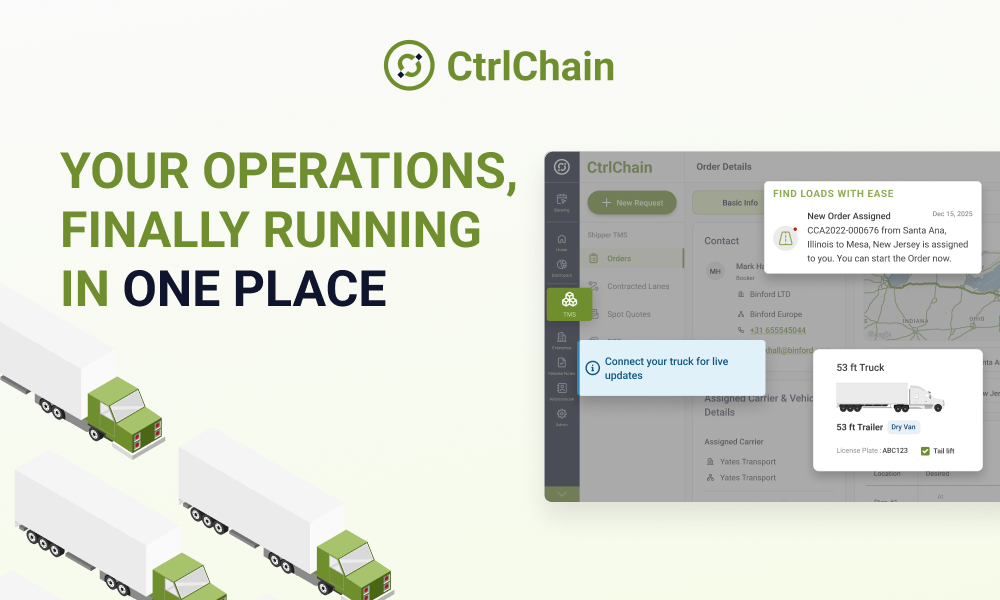
Your Road Operations, Finally Running in One Place
Most logistics teams juggle planning, carrier emails, spreadsheets, and status calls.
A unified TMS solves most of these issues by pulling everything into one clean workflow. Orders flow in automatically. Contracted lanes assign the right carrier without human input. Spot quotes run through a quick, structured quote flow. Every milestone updates in real time, every document lands in the right place, and every stakeholder sees the same truth.
It is the control layer that road logistics has always needed: less noise, fewer steps, and full transparency from booking to delivery.
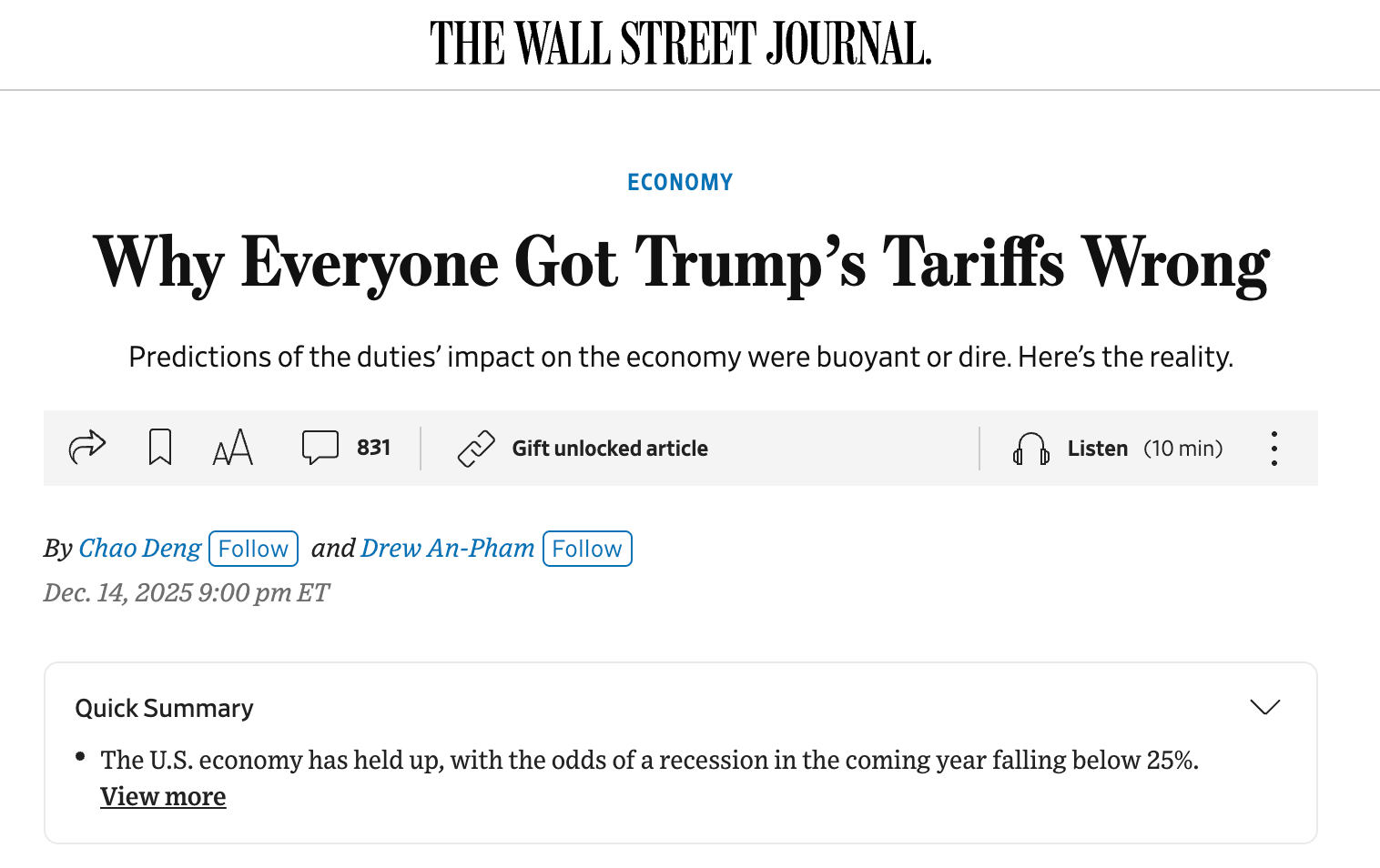
A Wall Street Journal article discusses how early predictions about Trump's tariffs missed the mark. Source: WSJ
📊 Tariff Reality Check. Early predictions around Trump’s April tariffs swung between economic boom and looming recession. The reality landed somewhere in between with trade flows adjusting, prices shifting unevenly, and neither the optimists nor the doomsayers fully proven right.
🚛 Ryder CEO Succession. Ryder outlines its 2026 plan as longtime CEO Robert Sanchez will retire March 31, 2026 and President/COO John Diez is set to become CEO.
🇲🇽 Mexico Customs Overhaul. Mexico’s proposed 2026 customs overhaul could tighten enforcement and reshape cross-border manufacturing by increasing compliance burdens.
🤝 Teamsters + Sysco Deal. Three Teamsters locals secured a four-year regional contract with Sysco that includes a significant 34 % wage increase and improved benefits.
🚨 Oregon DOT Raises Fines. Oregon DOT announced higher fines for motor carriers and ended its Trusted Carrier Partner Program, signaling tougher enforcement and reduced leniency.
🌉 Historic Bridge Truck Ban. Semi trucks are now banned from a 110-year-old Oregon bridge after repeated strikes caused damage, forcing permanent route changes for carriers operating in the area.
🎣 THE FREIGHT CAVIAR CORNER
FreightCaviar Podcast: Is technology enough to fight freight fraud? What can the industry expect in the year ahead? OTR Solutions President Clayton Griffin answers your biggest questions. Catch the episode on YouTube, Spotify, orApple Podcasts.
Manifest 2026: The industry’s most influential leaders will headline Manifest Vegas 2026, sharing the insights defining what’s next for supply chain and logistics. Register now to save $200 off the current price, a total savings of $700 off the on-site rate! ManifestVegas.com/FreightCaviar
I’m Adriana, a writer and editor at FreightCaviar. I’ve covered everything from freight tech to industry lawsuits and market shifts, helping scale us to almost 14K subscribers. My goal: to make logistics stories digestible, clear, and fun to read.
LA rejections just doubled, flatbed hit $3.74, and 9,500 drivers are off the road. Plus: SoCal theft ring busted, C.H. Robinson cuts headcount, UP CEO fires back, and more.
Keep up with the freight broker world in 5 minutes.
Join over 14K+ subscribers to get the latest freight news and entertainment directly in your inbox for free. Subscribe & be sure to check your inbox to confirm (and your spam folder just in case).