Two bills just dropped in the Senate that could reshape trucking faster than anything since deregulation. Plus: Russian hackers targeted your load board, flatbed rejection rates just hit 40%, and a robot is taking the Houston-Dallas overnight run.
This week: The Dalilah Law, a trucking bankruptcy that wiped out thousands overnight, a FreightGuard civil war on Reddit, and the payroll data that's predicting Q4 capacity.
On March 10, 2025, Transportation and Logistical Services, Inc. (TLS) had what seemed like just another Monday. That was until their phones started ringing off the hook. Confused carriers were calling about loads that TLS had never posted.
Hackers had taken over a TLS DAT account and flooded the load board with 19,000 fraudulent loads—causing mass chaos for both TLS and the carriers who unknowingly fell into the scam.
Here’s how it happened—and how brokers and carriers can protect themselves.
Carrier Assure is a platform that helps brokers and shippers assess and track carrier performance, enabling them to avoid fraudulent and unreliable carriers while streamlining the carrier selection process.
A Simple Phishing Email Opens the Door
It all started with a phishing email.
An employee at TLS received an email that looked like it came from DAT, urging them to log in immediately.
The email contained a fake DAT login link, and once the employee entered their credentials, the hackers had everything they needed.
🔹 They stole the employee’s DAT and email login credentials. 🔹 They logged into the DAT account from an IP address in New York. 🔹 They had full control—and TLS had no idea yet.
“We’ve notified our employees to be more careful about what they click on when receiving possible phishing emails.” – Jennifer Nolan, Logistics Coordinator, TLS
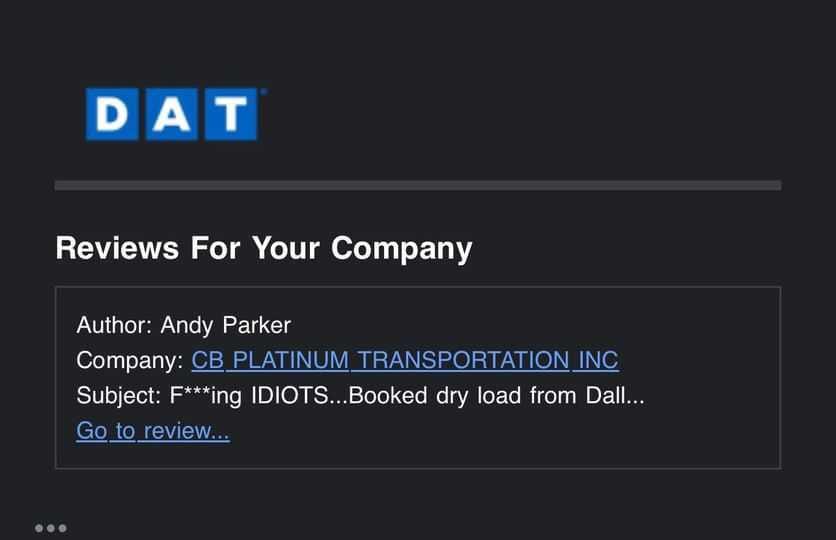
We’ve coveredthese DAT phishing attempts before, and it’s critical to train your entire team to spot and avoid them.
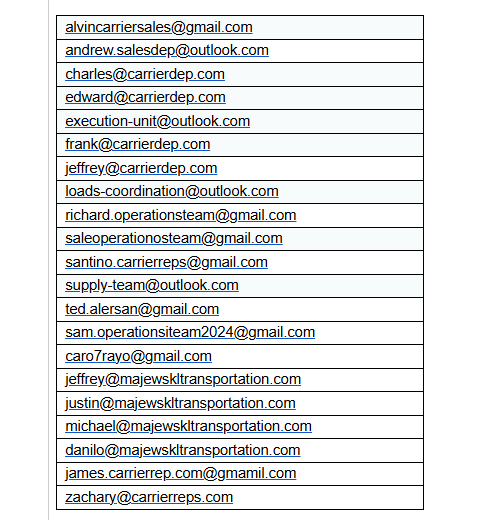
In the DAT postings, they included notes instructing people to email the contacts (shown in the above image) for more information. All of these emails belong to fraudsters, with some even impersonating legitimate logistics companies like Majewski Transportation.
Now in control of TLS’s account, the scammers moved fast, flooding DAT with 19,000 fraudulent load postings—all under TLS’s name.
The loads listed fake email contacts, redirecting carriers away from TLS and straight to the scammers.
The rates looked competitive, making them attractive to carriers.
TLS had no idea their account was being used for fraud—until the calls started coming in.
“Carriers were asking us for information about loads they saw posted that we had no idea about.” – Jennifer Nolan
The Paperwork: How the Hackers Made It Look Real
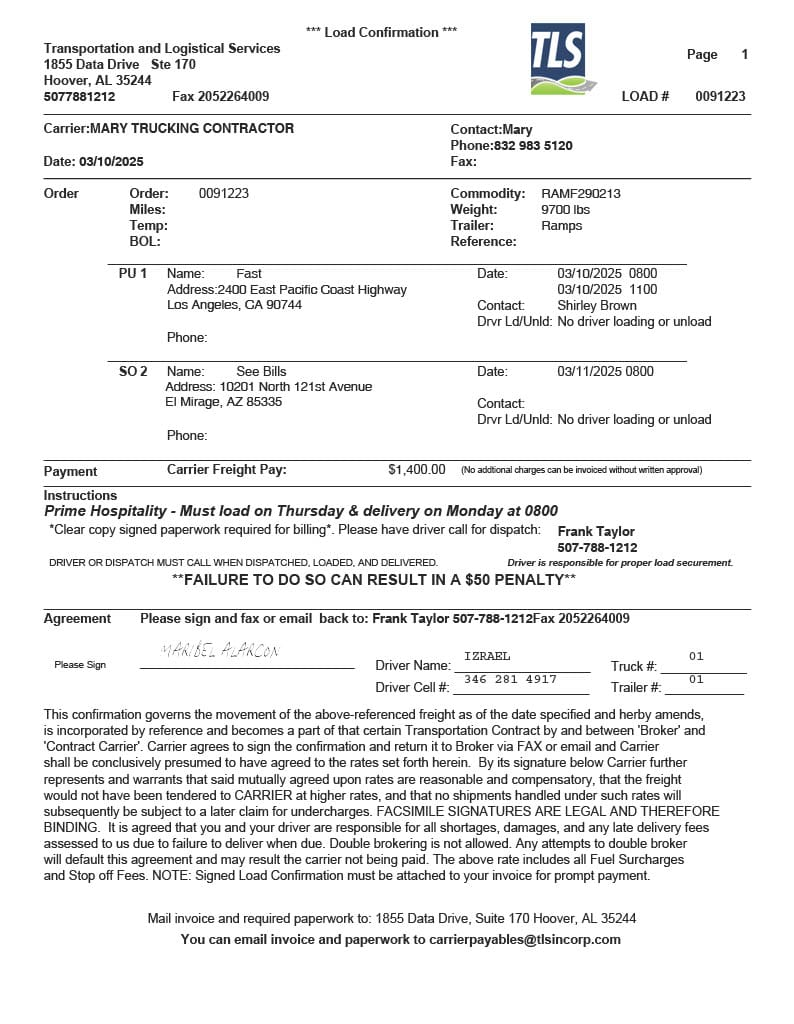
The fake rate confirmation the scammers made.
Scammers knew that just posting fake loads wouldn’t be enough—so they backed them up with convincing paperwork.
They took an old TLS rate confirmation from 2022 and altered it to match their fake loads.
They created a fake TLS carrier packet, complete with stolen branding and documents.
Carriers believed the paperwork was legit—because it looked like it came from TLS.
“The rate confirmations they sent to carriers had different fonts and alignment because they altered one of ours from 2022.” – Jennifer Nolan
Managing freight claims across emails, spreadsheets, and carrier portals is a mess. FreightClaims.com brings it all into one centralized system. Track, manage, and resolve claims efficiently from a single platform.
By 8:15 AM, TLS’s Birmingham and Dallas offices were under siege—not from hackers, but from thousands of phone calls from confused carriers.
Carriers were calling nonstop, asking about loads that didn’t exist.
TLS’s phone system became so overwhelmed it crashed.
The team quickly realized that their DAT account had been compromised.
“We received so many calls, it shut down our phone system.” – Jennifer Nolan
DAT Blocks the Account—But Not Before the Damage Was Done
Once TLS realized what was happening, they immediately contacted DAT for help. DAT acted fast, shutting down the compromised account and restricting admin access.
DAT identified that the account was being accessed from New York (instead of Texas).
They restricted access to prevent further postings.
But by then, some carriers had already picked up and delivered loads.
“DAT’s response was great. They acted very quickly to help us disable the jeopardized account.” – Jennifer Nolan
The Aftermath: Fake Loads Delivered, Money Lost
At least two carriers had already picked up and delivered loads, thinking they were working with TLS.
Another carrier requested a Truck Order Not Used when they realized something was off.
“We know of at least two carriers that picked up and delivered loads.” – Jennifer Nolan
Epay Manager is giving away a brand new Scotty Cameron putter at the TIA Capital Ideas Conference in San Antonio!
Want to win a Scotty Cameron putter? Follow Epay on LinkedIn and drop your business card at our booth for a chance to win!
We will draw the winner’s name LIVE on Epay’s LinkedIn immediately following our Learning Lab at TIA 2025 Capital Ideas; you don’t have to be present to win.
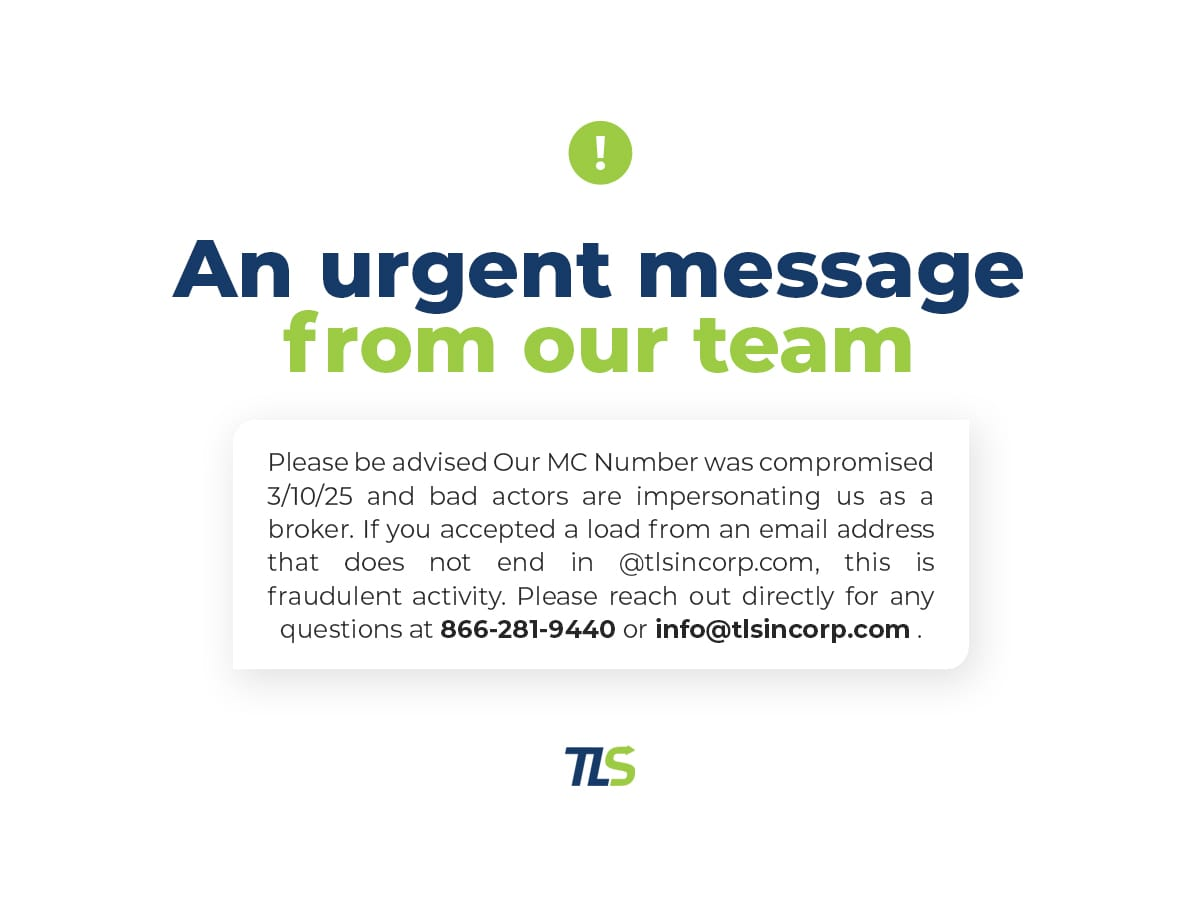
TLS has this pop-up on their website now.TLS has this pop-up on their website now.
After securing their account, TLS took action to prevent this from happening again and to warn others.
They posted alerts on Facebook and their website, so any affected carriers could see that TLS was also a victim.
They warned employees to be more cautious with emails and phishing attempts.
They called for stronger cybersecurity measures across the industry.
“We posted a notification on our Facebook page and our website, so if anyone who was a victim of the fraudulent activity searched for us, they would know we were also a victim.” – Jennifer Nolan
Lessons for Brokers & Carriers
We recently interviewed Aleksander Frelas, Founding Member of Velite.io, a cybersecurity company. He discussed the importance of corporate cybersecurity and tips on preventing hacks.
For Brokers: 1. Train employees to recognize phishing scams—these attacks start with one wrong click. 2. Enable multi-factor authentication (MFA) for DAT and other key platforms. 3. Regularly monitor load postings to catch suspicious activity early.
For Carriers: 1. Always verify loads with the broker before committing. 2. Scrutinize rate confirmations—inconsistencies in fonts, alignment, or missing details can be red flags. 3. If the broker stops answering calls after booking a load, it’s a scam.
“If it seems too good to be true, it probably is.” – Jennifer Nolan
Final Thoughts: Is the Industry Doing Enough?
TLS took the right steps once they discovered the breach, and DAT responded quickly—but this attack raises bigger questions.
Why was a single hacked account allowed to post 19,000 loads in such a short time?
Should load boards have automated fraud detection for abnormal activity?
As cargo theft and fraud continue to rise, the entire industry needs stronger defenses to prevent attacks like this before they happen.
I’m Adriana, a writer and editor at FreightCaviar. I’ve covered everything from freight tech to industry lawsuits and market shifts, helping scale us to almost 14K subscribers. My goal: to make logistics stories digestible, clear, and fun to read.
Two bills just dropped in the Senate that could reshape trucking faster than anything since deregulation. Plus: Russian hackers targeted your load board, flatbed rejection rates just hit 40%, and a robot is taking the Houston-Dallas overnight run.
This week: The Dalilah Law, a trucking bankruptcy that wiped out thousands overnight, a FreightGuard civil war on Reddit, and the payroll data that's predicting Q4 capacity.
Indiana pulled the trigger on carriers employing illegal CDL holders. Plus: tariff ruling could flood LA with imports, DC finally moves on double brokers, spot rates are outrunning contract, and more.
Keep up with the freight broker world in 5 minutes.
Join over 14K+ subscribers to get the latest freight news and entertainment directly in your inbox for free. Subscribe & be sure to check your inbox to confirm (and your spam folder just in case).