Congress is moving to put driverless 80,000-lb trucks on public roads. Plus: 13,000 California CDLs get cancelled, diesel hits a 32-year record, Florida wants $50K to get your truck back, and more.
Good Monday Morning. Today's main story drives you down the winding roads of U.S. highway history. Understand the timeline from dirt paths to sprawling interstates and the battle against cargo theft. We've also got the latest on the Colorox cyberattack fallout, Mexico-U.S. border logistics, and Governor Newsom's veto on the driverless truck ban. Further on, discover the TMS choices among large brokerages earning over $50M annually.
Question of the Day: All but four state capitals are directly served by the Interstate System. Which are excluded? Answer at the bottom of the newsletter.
Today's Newsletter is Brought to You By Rapido
In today's email:
Three Freight Headlines: Clorox factories are disrupted by a cyberattack, nearshoring intensifies Mexico-US trade, and California might have more driverless big rigs after Newsom's veto.
The History of US Highways
Around the Freight Web: Large brokerages favor certain TMS, investors bet on rail freight growth, rising diesel prices concern Big Oil, plus more.
Freight Meme of the Day
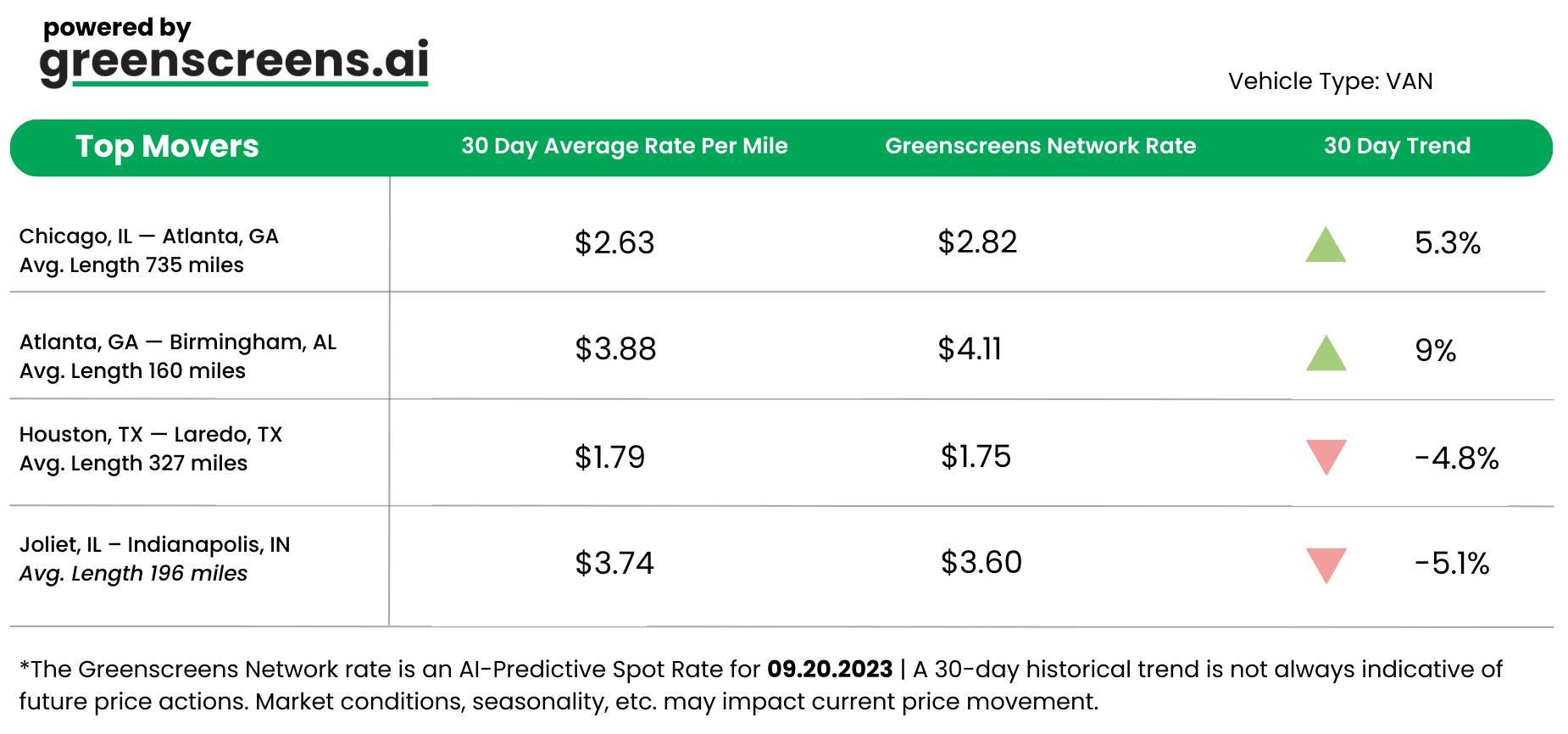
TOP LANE MOVERS POWERED BY GREENSCREENS.AI
*Greenscreens.ai forecasts real-time truckload buy prices that are suited to each freight brokerage's purchasing power using AI and machine learning. Its engine takes into account over 130 attributes and data points in each rate forecast.
🐔 WHAT’S COOKIN’ IN FREIGHT
Clorox items are facing shortages due to factory shutdowns after a cyber breach. Photo Credit: Tiffany Hagler-Geard, Bloomberg/Getty Images.
🥷 Clorox Faces Product Shortages After Cyberattack. A cyberattack on Clorox's IT systems last month has led to nationwide product shortages, affecting its bleach, cat litter, and other products, with significant anticipated impacts on its quarterly results. While the majority of its US factories have resumed production, some continue to face disruptions, processing orders manually. Clorox is collaborating with the FBI on the ongoing investigation of the attack.
📈 Surge in Nearshoring Strains Mexico-US Border Logistics. Rising nearshoring trends have made Mexico surpass China as the top source of US imports, leading to a significant strain on the capacity and infrastructure at the Mexico-US border. With a surge in Mexico-US trade, the logistics landscape is shifting from US west coast ports to increased land-based trade, necessitating enhancements in border clearing capabilities, services, and infrastructure. Challenges like strained trucking capacities, both in the US and Mexico, have caused some shippers to turn to intermodal solutions.
🚛 Newsom's Veto Paves Way for Fully Driverless Big Rigs in California. California's Governor Gavin Newsom vetoed a bill that aimed to make it mandatory for large self-driving trucks to have a human on board. Although many legislators and labor groups supported the bill, Newsom believes that the existing rules in place are already comprehensive enough to ensure safety.
TOGETHER WITH RAPIDO
Rapido is a top nearshore staffing company providing logistics and supply chain talent to companies in the United States. Based in Guadalajara, Mexico, Rapido offers a unique combination of cost savings and access to a skilled workforce, making it an attractive option for American logistics businesses.
See what makes nearshoring to Mexico an attractive option for scaling a logistics company and how partnering with Rapido Solutions Group simplifies the whole process.
The History of Highways
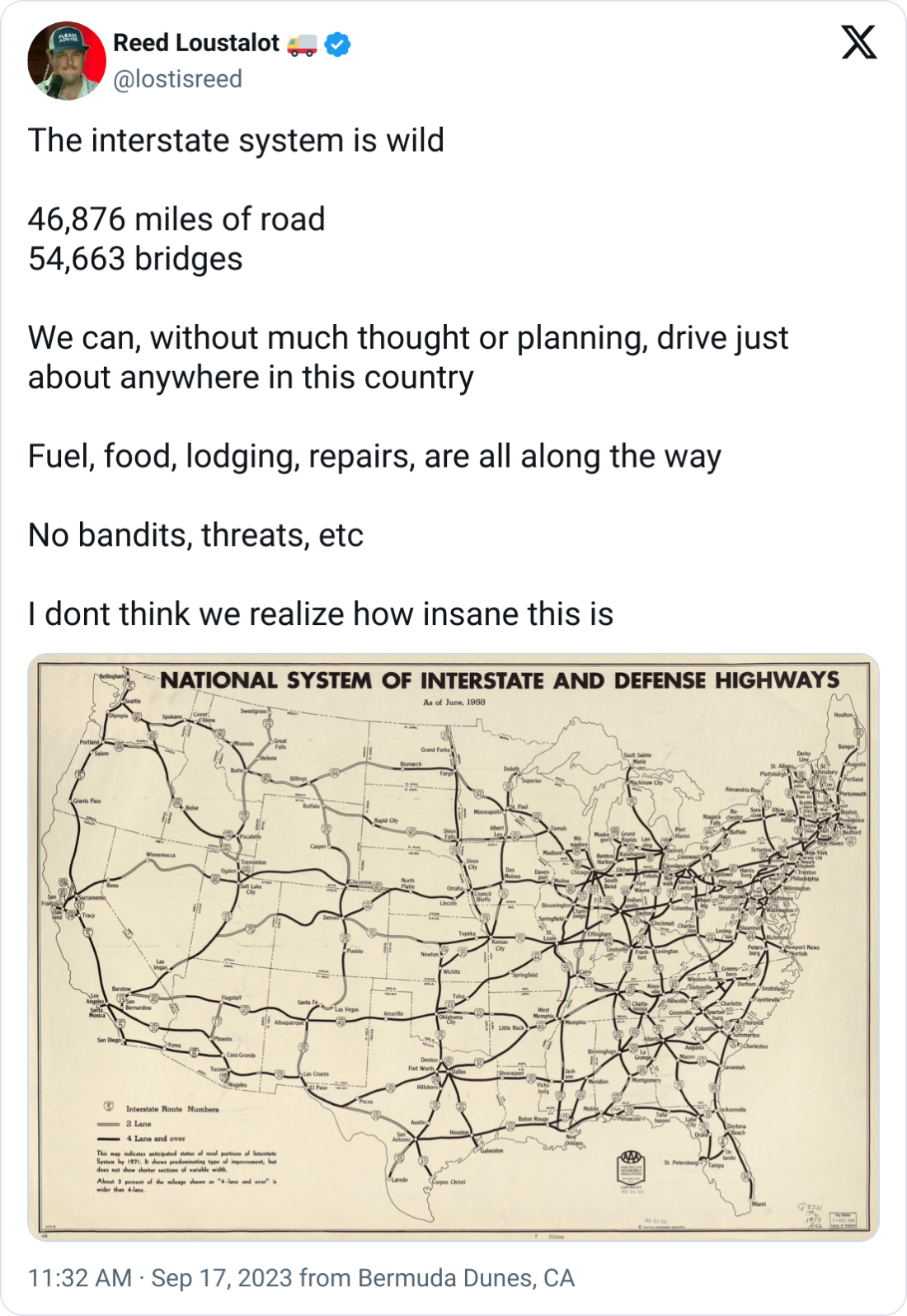
In the relentless rush of cargo hauls and delivery schedules, it's a rarity to hit the breaks and appreciate the engineering marvel of the U.S. highway system. It's a vast web of meticulously planned roadways connecting the sprawling American landscape into one cohesive entity. But how did we get here? Let's take a closer look at the history of highways in America.
U.S. Highways – A Timeline:
1920s: The Federal Aid Highway Act of 1921 kickstarts the American highway system, paving paths where only dirt once laid.
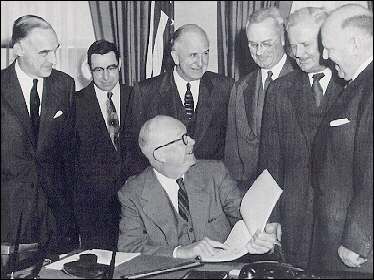
President Eisenhower receives the Clay Committee report, endorsing funding for a national interstate network. Source: Federal Highway Administration
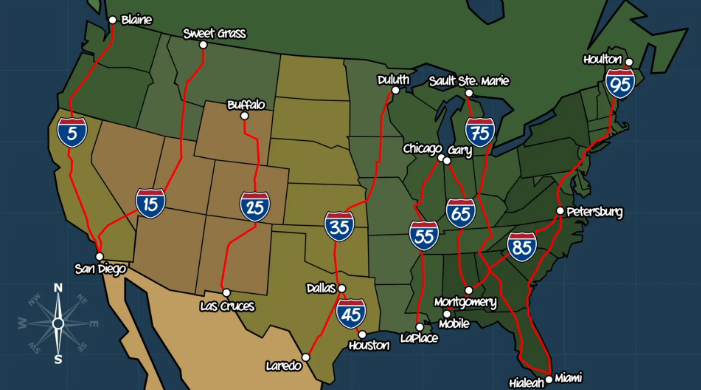
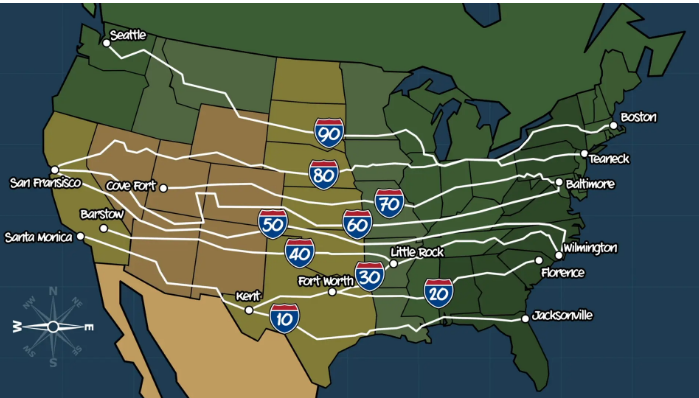
1950s: Under President Eisenhower, the Interstate Highway System is born with the Federal Aid Highway Act of 1956. But wait, why the odd and even numbering? Easy. Odd numbers run north to south (like I-5), and even ones coast to coast (like the legendary I-10).
Odd numbers run from north to south. Source: YouTube | CGP GreyEven numbers run coast to coast. Source: YouTube | CGP Grey
Iconic Interstates: Route 66: The Main Street of America, Chicago to LA. I-10: Coast-to-coast cruising from Florida to California.
1970s: The use of the CB radio links truckers, making highways less lonely. The phrase "Breaker breaker 1-9" became the signature call, and tales from the road echoed across the airwaves.
1990s-2000s: The Intermodal Surface Transportation Efficiency Act (ISTEA) of 1991 gives highways a major makeover, replacing crumbling roads with sleek, modern thoroughfares.
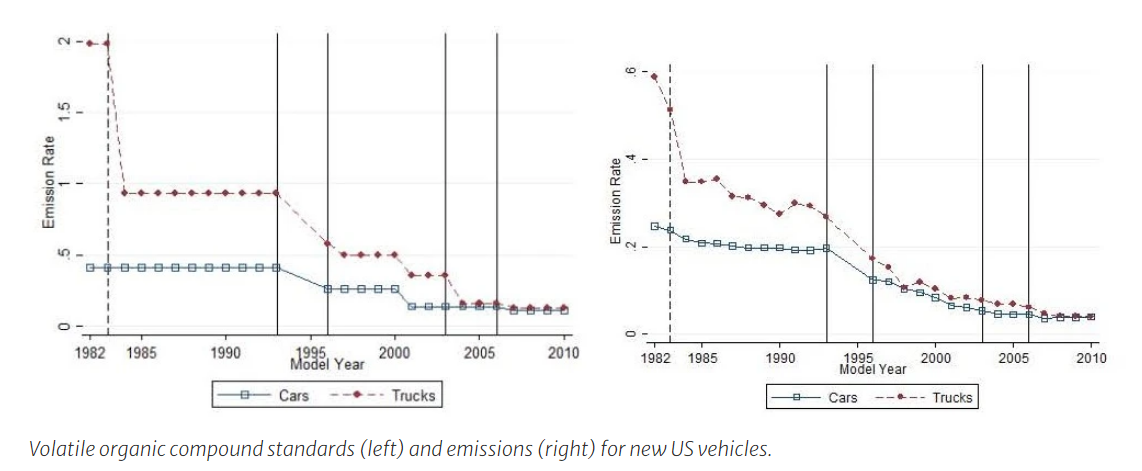
2000s: The new millennium cast a spotlight on environmental and safety standards, with stringent regulations curbing emissions from heavy-duty trucks and rendering the highways both eco-friendlier and tech-advanced.
These graphs show exhaust standards and actual emissions for cars and trucks. Source: Energy Institute Blog, UC Berkeley
2010: The Compliance, Safety, and Accountability (CSA) program launches, tightening trucking safety.
Bandit Free Highways? Not so fast.
Pre-1990s: Cargo theft, once a low-priority crime, saw thieves exploit unattended trucks and security gaps at docks and rest areas. The absence of unified reporting and inter-state coordination masked the real scale of theft, making it a low-risk activity for criminals.
Late 1990s: The era’s end marked heightened awareness of cargo theft’s economic toll. Authorities now saw the pressing need for dedicated resources and specialized task forces for this issue.
2006-2013: The initiation of H.R. 3199 in 2006 underscored the government's focus on curbing cargo theft. This momentum continued with the launch of NIBRS in 2010, enhancing cargo theft reporting. By 2013, the first NIBRS cargo theft data shed new light on the scale and patterns of these crimes.
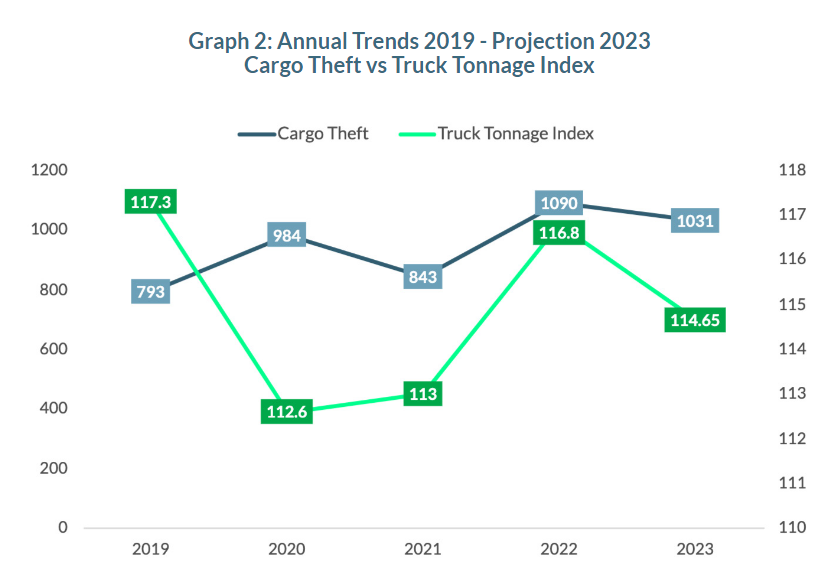
Despite these advancements, cargo theft continues to escalate. Overhaul recorded a total of 1,090 cargo thefts throughout the U.S. in 2022. A 29% increase in volume and a 58% increase in value from 2021.
Source: Overhaul U.S. Cargo Theft Report 2022
Cargo theft continues to be a $15 to $35 billion industry in the United States.
Looking Ahead
What will the next chapter of U.S. highways bring? With the advent of electric and autonomous trucks, it's easy to envision a future of smart highways in sync with high-tech vehicles. It's a future that isn't too far off.
UNLOCK THE POWER OF OBJECTIVE PERFORMANCE DATA WITH ISO
What if you had access to this type of data the next time you cold call a Shipper? ISO is the industry’s first neutral Service Index, providing freight brokers with a platform to objectively measure their performance strengths. Gain access to industry-wide performance benchmarks, dynamic carrier & customer scorecards, and powerful analytics to raise service standards across your network. Visit iso.io to get started.
AROUND THE FREIGHT WEB
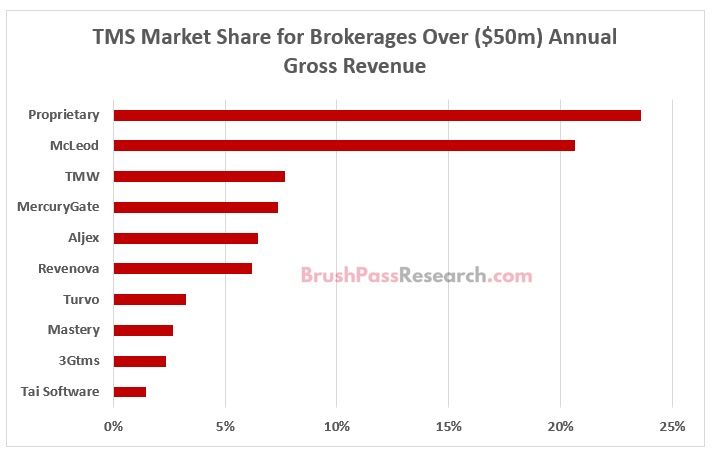
Breaking down the favored TMS choices for brokerages with over $50m annual gross revenue. Source: Kevin Hill, LinkedIn.
📊 Top TMS Usage Among Large Brokerages. Around 300 to 350 freight brokerages earn over $50m annually, with Proprietary, McLeod, and TMW being the most popular TMS choices among them.
🚂 Investors Are Bullish on Railing Freight. Amergin, a transportation equipment leasing company, acquired 6,000 railcars, while Greenbrier, a freight railcar manufacturer, secured $1.9B in new orders amid rail freight growth predictions.
⛽ Diesel Surge & Big Oil's $100 Worry. As diesel prices jump by ~20%, Big Oil fears the nearing $100/barrel mark could deter consumer spending.
😎 2023 Gartner Cool Vendor in Logistics. Isometric Technologies (ISO), a leader in logistics performance measurement, has been recognized as a 2023 Gartner Cool Vendor in Logistics Technology. ISO is a proud sponsor of ours.
🚁 Zipline Gains Approval for Advanced Drone Deliveries. Zipline receives FAA clearance for beyond-visual line-of-sight drone deliveries, enhancing its market position and further advancing autonomous package delivery capabilities.
📍Chicago, IL. Come network& have fun. The FreightCaviar Team & Reed Loustalot will be hanging out today at the Shamrock Club starting around 5 PM. We expect a decent turnout since JOC is taking place in the city.
🎧 The FreightCaviar Podcast. Listen to this week’s podcast on Spotify & Apple Podcasts.
🤝 Master the essentials of freight brokering with Freight360's comprehensive online course, tailored for both aspiring brokers and current agents looking to enhance sales and operations. Receive $150 off your course with our code FREIGHTCAVIAR. Click here to learn more.
Answer: Juneau, AK; Dover, DE; Jefferson City, MO; and Pierre, SD.
I’m Adriana, a writer and editor at FreightCaviar. I’ve covered everything from freight tech to industry lawsuits and market shifts, helping scale us to almost 14K subscribers. My goal: to make logistics stories digestible, clear, and fun to read.
Congress is moving to put driverless 80,000-lb trucks on public roads. Plus: 13,000 California CDLs get cancelled, diesel hits a 32-year record, Florida wants $50K to get your truck back, and more.
Oil spikes to $120 on Iran news before settling near $106. Plus: another influencer shipment gets stolen, Wyoming can now pull your truck, 24 states sue over tariffs, and more.
Keep up with the freight broker world in 5 minutes.
Join over 14K+ subscribers to get the latest freight news and entertainment directly in your inbox for free. Subscribe & be sure to check your inbox to confirm (and your spam folder just in case).