March's freight market update. Plus: Elon's $25B chip factory in Texas, UNFI closing a Wisconsin DC, Chick-fil-A building its own supply chain, and more.
LA rejections just doubled, flatbed hit $3.74, and 9,500 drivers are off the road. Plus: SoCal theft ring busted, C.H. Robinson cuts headcount, UP CEO fires back, and more.
Matthew calls it the most important court case for brokers across the US.
Why is it so important- and why should you care?
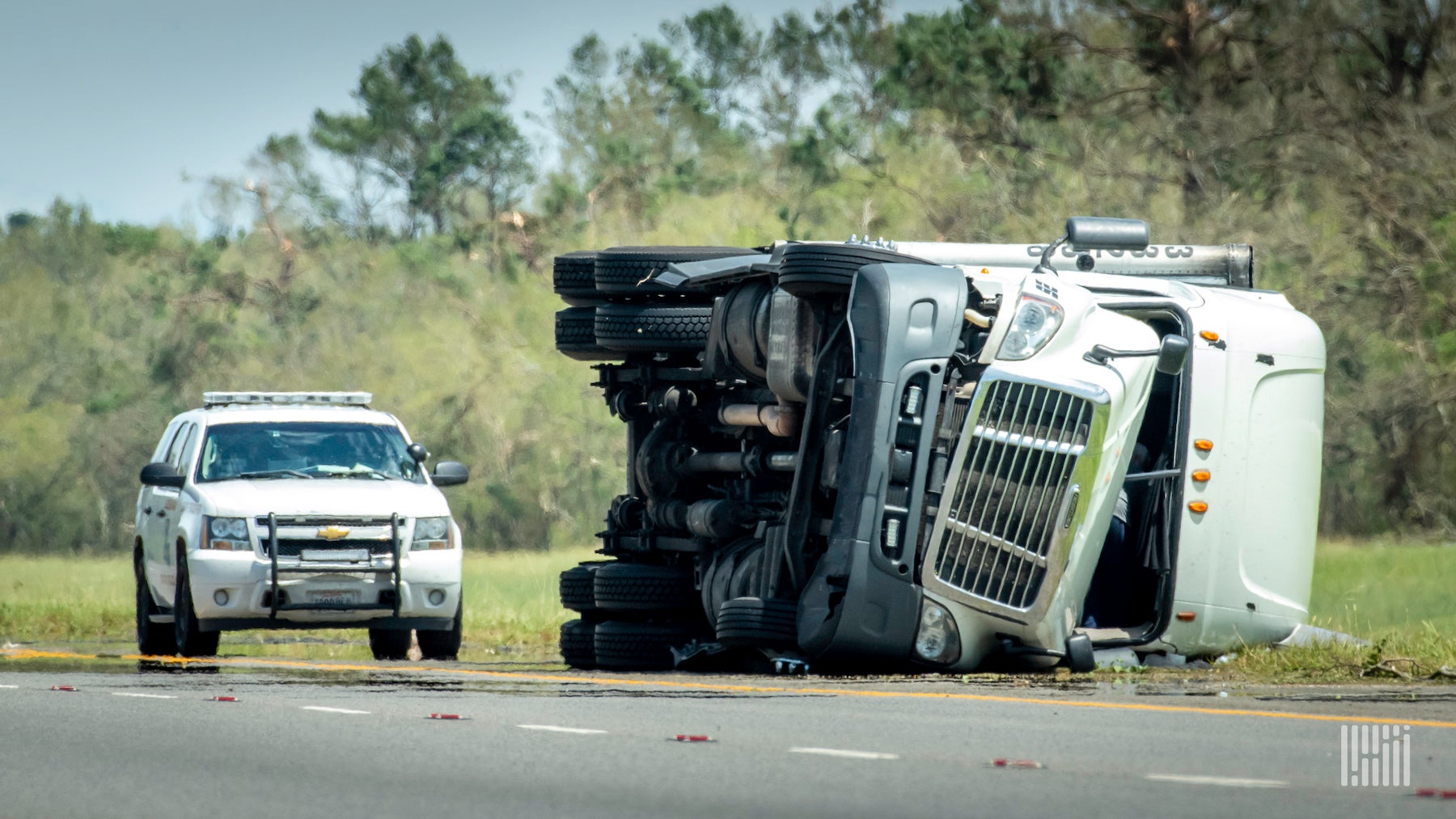
It tackles a critical question: when can a broker be held liable for the negligence of a motor carrier? In other words, if an accident occurs, can the broker be blamed? This question has bounced around courts for years, but now that the case is headed to the Supreme Court, we may finally get a definitive answer.
All similar cases follow a specific pattern, Matthew explains.
“A broker hires a motor carrier, then he picks up the freight, and an accident occurs. A lawsuit is filed. Usually we know who is responsible. Then you ask who else can you go after? A finger then also is pointed at the broker. But brokers are responsible for price, route and service- they’re not touching the freight, they don’t own it or maintain the truck, much less own it.”
The problem? State courts disagree.
“Motor carriers are poorly maintained, underinsured, and who can you go after? It’s the brokers. And the brokers are saying, “What do you want us to do? We called the shipper, we found them money and the load, went to the motor carrier and asked, ‘Hey, can you do this? The Federal government says they’re fine. And yet you’re still going to sue me?’
This disagreement is why brokers have been pushing for decades for this case to go to the Supreme Court.
The oral argument for the case is set to take place in early March, where C.H. Robinson, the plaintiff Montgomery, and the U.S. government will all present their positions.
The outcome could fundamentally change a broker’s role in every transaction.
“And that’s what the plaintiffs and some of the states want- they want the broker to be the guarantor, to be on the hook for these things. And the entire business model of brokerage, every aspect of it, even the laws we have on the books now, is predicated on them not being held responsible.”
Brokers are not legally required to carry this type of liability insurance, so they often don’t. Larger companies, like C.H. Robison, do a small brokerage could be ruined by a single accident.
Matthew predicts C.H. Robinson will prevail, but the stakes couldn’t be higher.
Here is the breakdown of a second case that has everyone equally on the edge of their seats.
It’s being called a "once-in-a-century" constitutional showdown.
Why logistics and supply chain professionals should care?
Because it sits right at the intersection of trade policy, tariffs, and executive power—all things that can instantly reshape supply chains.
“The tariff case, or the VOS selections, also known as the Learning Selection case, is about the reciprocal tariffs that were put in after liberation day of last year, and it’s one of the most interesting cases about federalism and all the things about checks and balances, and I’m so excited for that to have an order.”
Unlike most constitutional cases that take decades, this one is moving fast. Why?
“This is the most important case of our lifetime because if this power remains, it fundamentally changes the executive branch — for better or for worse.”
It's not just about the price of toys or wine; it’s a fight over whether the President can unilaterally act as the nation’s "Tax-Collector-in-Chief" by declaring an emergency.
Matthew explains: the U.S. government is a three legged stool, holding legislative, judiciary and executive power, where each one has the same power as the other, and they check and balance each other.
The Congress has two very clear powers- the ability to declare war, as well as the power to raise revenue, generate taxes. So what we’ve seen with IEEPA (International Emergency Economic Powers Act of 1977 )- it says that the President can declare an emergency, whatever he decides it may be.
The only way to stop that emergency declaration is for Congress to pass with a majority– but a president can veto that. And so, the only way you can change the emergency declaration is if you have ⅔ of Congress - and you will never have ⅔ of Congress do anything. So here is the problem that Matthew sees:
“You may love tariffs, but imagine your worst political nightmare gets in the office and they have those powers. And once the power is there, they don’t give it back.”
The Supreme Court faces two questions:
Did the statute actually authorize raising revenue?
Even if it did say you could raise revenue, does Congress even have the power to give that up?
If the Court sides against the government, hundreds of millions of dollars could be at stake.
Keep up with the freight broker world in 5 minutes.
Join over 14K+ subscribers to get the latest freight news and entertainment directly in your inbox for free. Subscribe & be sure to check your inbox to confirm (and your spam folder just in case).