Tucker Carlson’s nicotine brand loses 378,000 tins in a cargo theft. Plus: produce rates reset, diesel climbs, and a bill that could pull hundreds of thousands of drivers off the road.
The Middle East crisis is already hitting carriers. Plus: Florida lost $3B in crops, flatbed rates posted a fifth straight weekly increase, a $5B brokerage was just acquired, and more.
FreightCaviar Weekly Recap.From a costly bidding mistake to surprising job numbers and UPS’s uncertain future. Here are this week’s most talked-about freight stories.
Today's Newsletter Is Brought To You By TrueNorth.
Reddit Post of the Week
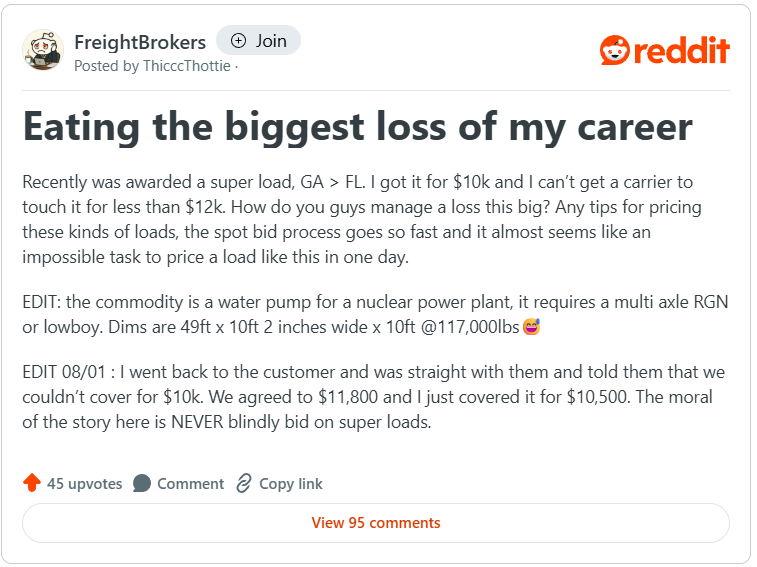
Over on r/FreightBrokers, a broker shared one of the more painful, but instructive, lessons of their career this week. They landed a "super load" from Georgia to Florida for $10,000, only to find out that carriers wouldn’t touch it for less than $12,000.
The freight? A 117,000-pound water pump for a nuclear power plant, requiring a multi-axle RGN or lowboy with dimensions pushing 49 feet long and 10 feet wide. With only a day to quote, they admitted to misjudging the rate and were staring down a serious loss. Per usual many left their thoughts on this situation with one person saying:
“Step 1 is to get quotes from carriers. Step 2 is to figure out how much you need to charge to be viable. Step 3 is to offer a rate. You forgot the first two steps.”
Others in the thread pointed out the danger of rushing quotes, especially on specialized freight. While time pressure is common in the spot market, some urged patience.
“Give it a few days. Post it, make calls, and let the market respond. One $12K quote doesn’t define the lane.”
Ultimately, the broker took ownership. They returned to the customer, explained the issue, and renegotiated to $11,800, covering the load for $10,500, a painful but manageable hit. As one redditor said:
“Eat the loss. Your reputation is everything. That same customer might be your biggest one next year—and they won’t forget how you handled it.”
The final takeaway? Never blindly bid on super loads. Price with discipline, buy yourself time when possible, and remember, your word travels faster than your margin.
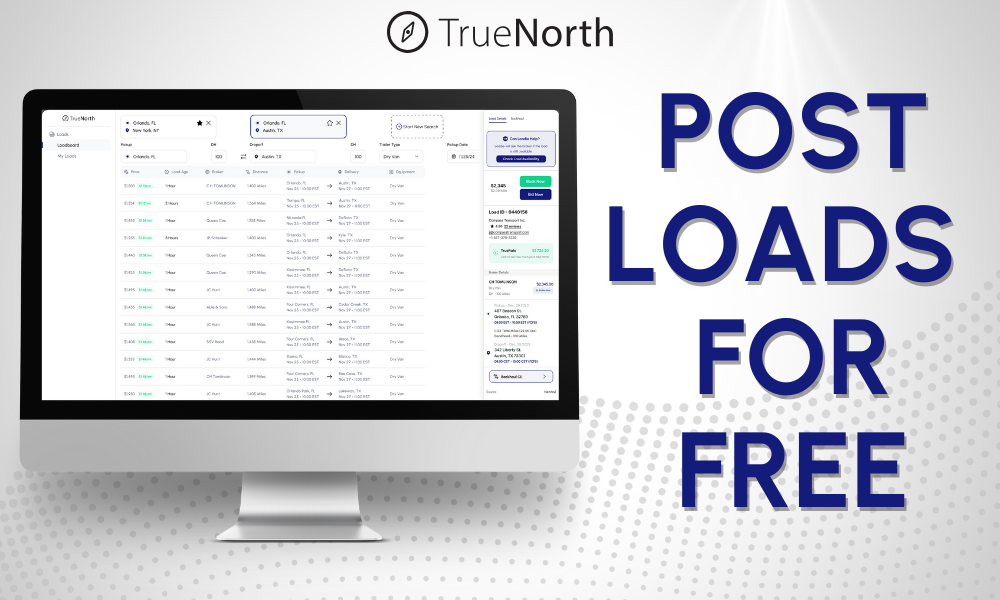
At TrueNorth, we make posting loads easy – and free!
Our introductory package for brokers allows for unlimited posting to our loadboard at no charge. And our advanced packages–including hosting your own private platform–mean you’ll never want another loadboard again.
We’re already a FreightTech 100 Winner for top loadboards with reach to 50,000+ carriers, and we’re just getting started . . .
Contact us today for a demo and set up your free load postings in a snap.
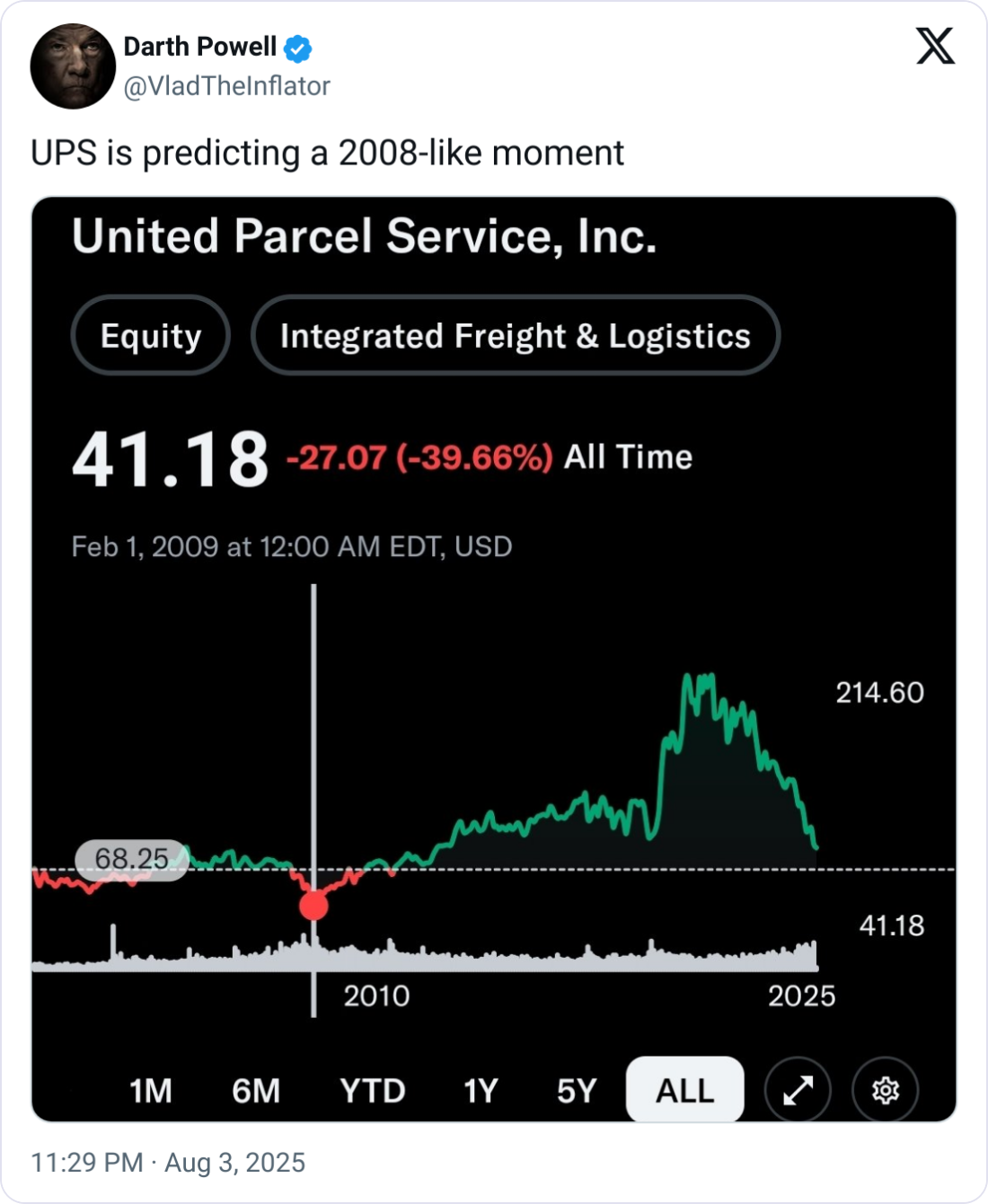
Is UPS hitting rock bottom? As of now, it's hard to say. The company did report revenue falling year over year, though they expected this due to the current trade climate.
As their shares continue to fall, CEO Carol Tome said in a statement that the company continues to operate in "a dynamic and evolving trade environment." With no end to this downturn in sight for the foreseeable future, many are question what could be the true reason.
Some are blaming current shipping pricing with one commentor on the X post stating:
I mailed a package via UPS this morning and it cost me $42 for ground that would take 5 days to get there. It wasn’t even a big or heavy package. That seemed insanely expensive until he told me same arrival date via USPS would be $71!🤦♀️ - Beck
Whereas others are chopping it up to everyone being "broke."
Despite this, some believe things won't be as bad at the 2008 recession with Original Settler leaving their thoughts on the matter:
I don't think this is going to model like any other recession. We have too many huge businesses on-shoring.
So as of now, it's a wait and see game, especially after the latest chapter of trade was written when the August 1 tariffs went into effect.
FreightCaviar Story of the Week
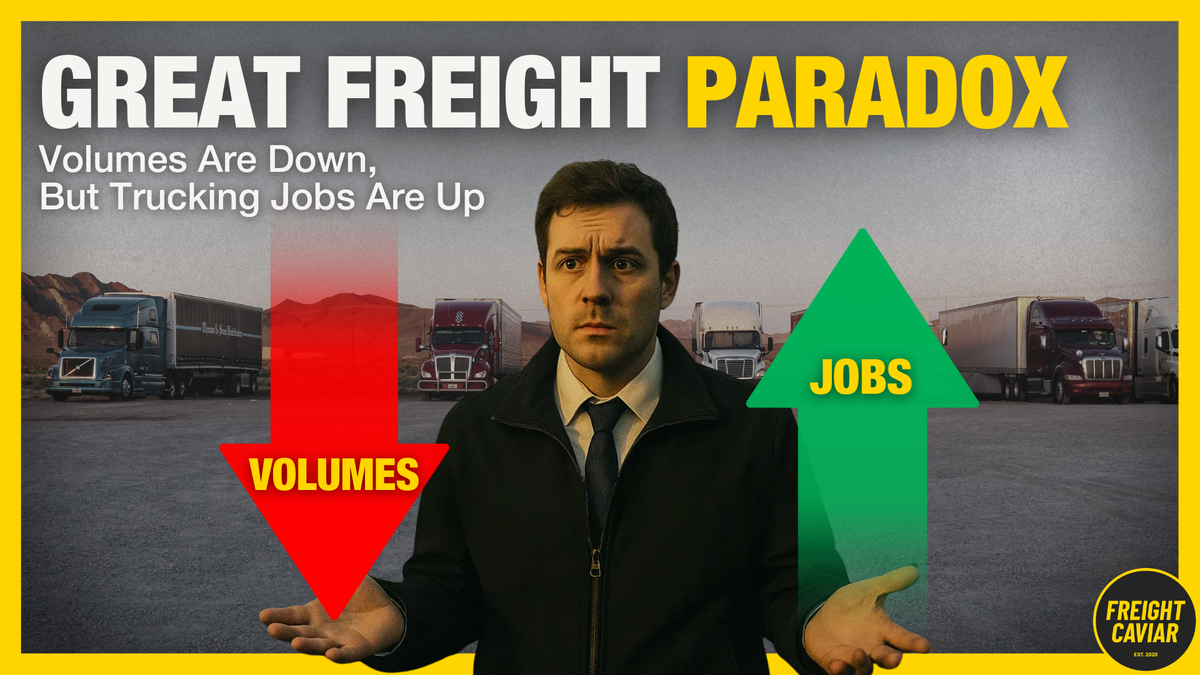
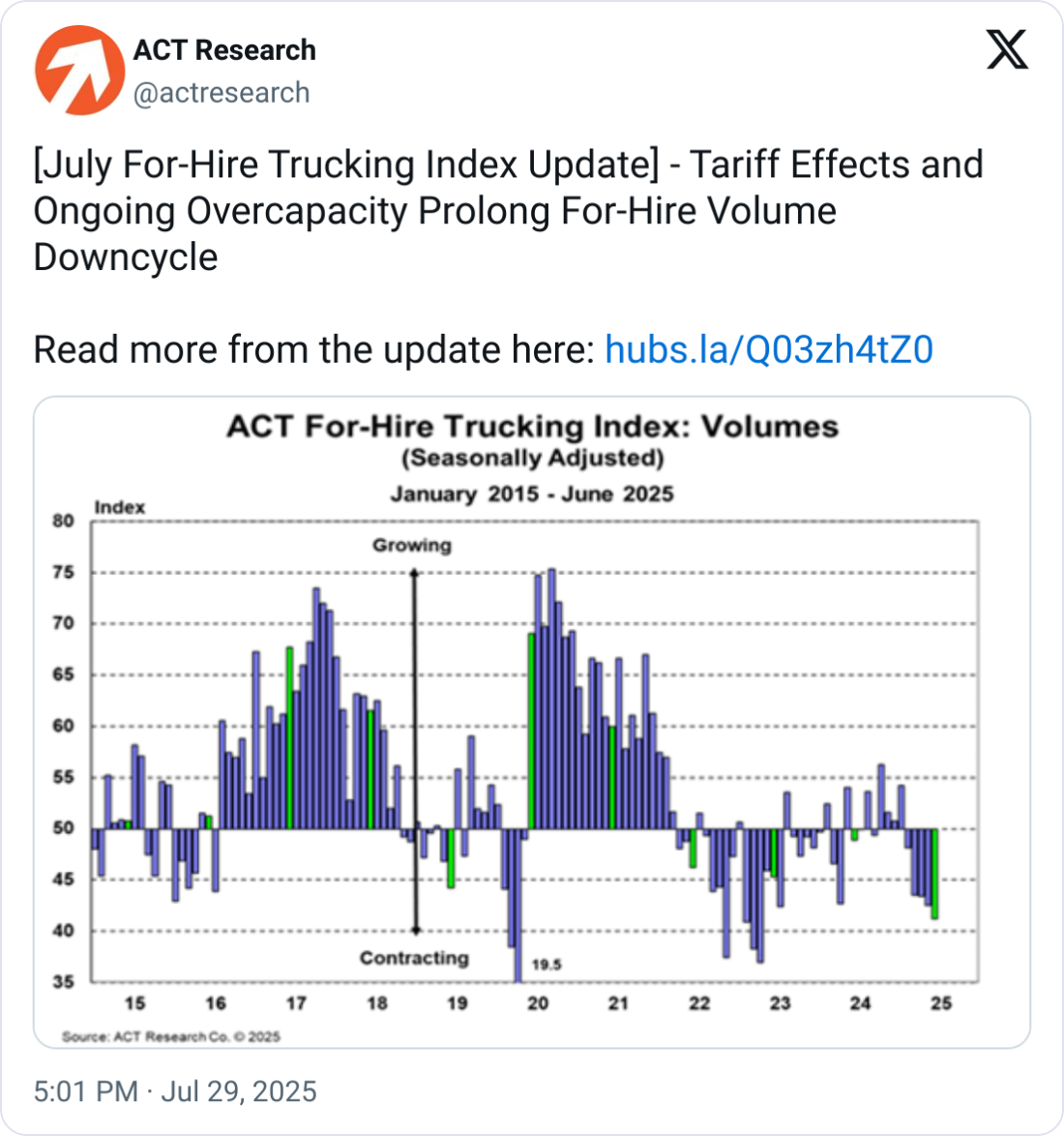
Trucking jobs are up, but freight volumes are down. In July, the BLS reported 3,600 new trucking jobs added, despite the ACT For-Hire Volume Index falling to 41.5—its fourth straight monthly decline. Warehouse employment, meanwhile, dropped by 6,400, hitting its lowest level since October 2021.
So why are fleets hiring in a soft freight market?
The answer lies beneath the surface. Smaller carriers, like TGS Transportation, are exiting and larger fleets are absorbing both their freight and drivers, showing up as employment gains without reflecting true market growth. At the same time, big carriers are upgrading their driver pool, trimming underperformers and hiring experienced replacements. And with inventory levels finally clearing, some fleets are preparing for a second-half restocking wave by getting drivers seated early.
The result is a market that appears stable on paper, but is still rich in capacity, tight on rates, and undergoing rapid structural change. The floor on pricing may be firming as the low-cost capacity disappears, and those who survive this cycle are positioning for the next.
👉Read the full story for a deeper look at the numbers behind the paradox and what they mean for brokers, carriers, and rates heading into the later half of the year.
LinkedIn Post of the Week
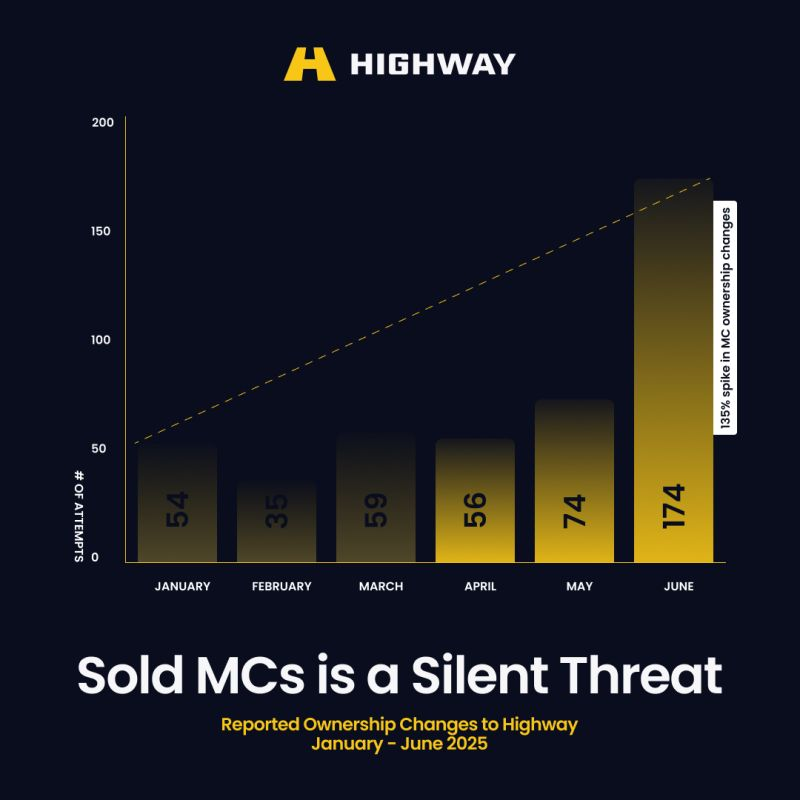
Highway’s latest data shows a 135% spike in MC ownership changes in Q2, a surge that could spell a growing tactic in freight fraud is one is not careful.
Rather than creating fake credentials, pretenders are buying active MCs off sites like Ebay for example:
These MCs typically come with clean histories to bypass onboarding controls and slip through unnoticed. It’s a quiet but effective strategy that exploits trust built over time.
Now it’s no longer enough to verify the MC number. Brokers and shippers need to vet the full story behind carrier activity, including ownership shifts and operational red flags.
This trend isn’t just a compliance issue, it poses a direct risk to freight security.
FreightCaviar Podcast: What happens when a freight broker quits to go to law school, but ends up building three logistics companies instead? Tyson Lawrence, CEOof Diablo Freight Ventures, joins us on the latest episode to discuss his journey. Catch it on YouTube, Spotify, or Apple Podcasts.
Manifest 2026: FreightCaviar community, tap into massive savings on Manifest 2026. Get registered now and save $1100 on your attendance price. Click here for the deal.
Freight Broker Group Chat: Lost a load to a ghost MC? Just discovered a 15-layer carrier spoof ring? Come swap war stories, drop memes, and ask the stuff no one wants to post on LinkedIn. Join us on forum.freightcaviar.com
Hello! I'm Jerome FreightCaviar! I’m into the politics of freight and the impact it will have worldwide. I'm always eager to learn more. Follow me on X @JeromeFreightC
Tucker Carlson’s nicotine brand loses 378,000 tins in a cargo theft. Plus: produce rates reset, diesel climbs, and a bill that could pull hundreds of thousands of drivers off the road.
The Middle East crisis is already hitting carriers. Plus: Florida lost $3B in crops, flatbed rates posted a fifth straight weekly increase, a $5B brokerage was just acquired, and more.
Two bills just dropped in the Senate that could reshape trucking faster than anything since deregulation. Plus: Russian hackers targeted your load board, flatbed rejection rates just hit 40%, and a robot is taking the Houston-Dallas overnight run.
Keep up with the freight broker world in 5 minutes.
Join over 14K+ subscribers to get the latest freight news and entertainment directly in your inbox for free. Subscribe & be sure to check your inbox to confirm (and your spam folder just in case).